


07-09-2026
The Spectrophotometer: measuring color beyond visual perception

In industrial quality control, measuring color objectively is often more complex than it may seem: the human eye is subjective and influenced by ambient lighting and visual fatigue.
The spectrophotometer was developed precisely to overcome these limitations, providing a precise and repeatable numerical value on which companies, laboratories and quality control departments can base their decisions.
Understanding what a spectrophotometer is, how it works and what types are available means understanding how color can become an objective, measurable and shareable piece of data throughout the entire production chain.
What is a Spectrophotometer
A spectrophotometer is an optical measuring instrument that analyzes the light reflected or transmitted by a material to determine its color in an objective, numerical and repeatable way over time. Unlike visual assessment, which depends on the observer and the lighting conditions at the time of evaluation, a spectrophotometer provides data that can be compared across different operators, shifts and production sites.
In the field of industrial colorimetry, this instrument is the primary reference for defining, controlling and communicating color throughout the entire production chain, from the formulation laboratory to in-line quality control, transforming an otherwise subjective assessment into verifiable and shareable data for departments, suppliers and customers.
It is no coincidence that when referring to a spectrophotometer for paints, a spectrophotometer for automotive refinishing or instruments for controlling the color of textiles and plastics, the reference is always to the same category of instrument, available in different configurations depending on the field of application.
Its performance is not defined arbitrarily: the operation and calibration criteria of spectrophotometers are based on recognized international standards, developed by organizations such as the CIE (Commission Internationale de l’Éclairage) and incorporated into ISO and DIN technical standards.
This shared regulatory framework is what enables two different instruments, used in different plants or countries, to provide truly comparable color measurements.

What is a Spectrophotometer used for and what does it measure
Lo spectrophotometer measures the amount of light reflected or transmitted by a sample across the entire visible spectrum, providing a spectral curve that accurately describes the optical behavior of the material at each wavelength.
From this curve, the instrument’s software calculates the main colorimetric values, such as CIELab coordinates and color difference indices (delta E), used to objectively compare two samples.
Measurement can be performed in two distinct modes, selected according to the nature of the material. In reflectance measurement, suitable for opaque or semi-opaque surfaces such as paints, textiles and metals, the illuminant and the sensor are positioned on the same side of the sample, and the percentage of light returning to the sensor, ranging from 0 to 100%, defines the spectral data.
In transmittance measurement, suitable for transparent or semi-transparent materials such as glass, plastic films and liquids, the sensor is positioned on the opposite side of the illuminant and detects the light that actually passes through the sample.
In industrial processes, this measurement capability translates into a range of practical, everyday applications:
- verifying that a production batch meets the color standard approved by the customer
- objectively quantifying the difference between a sample and the reference color
- supporting the laboratory in the formulation of new shades and color correction
- ensuring color repeatability across suppliers, production lines and different facilities
- documenting color compliance in a traceable manner for quality purposes
A common case in industrial practice is that of a company receiving a supply of colored material from two different facilities: only the comparison of spectral data, rather than visual assessment, makes it possible to determine with certainty whether both batches fall within the agreed color tolerance, avoiding disputes, returns and production downtime.
This application-oriented approach makes the spectrophotometer an essential instrument wherever color represents a measurable product requirement, rather than merely an aesthetic element, reducing waste caused by color non-conformities and making technical communication between suppliers and customers faster and more effective.
How a Spectrophotometer is made: the main components
Regardless of the differences between individual models, the structure of a spectrophotometer for colorimetric applications is based on several main components, each with a specific function in the measurement process.
- Illuminant: the light source, generally LED, xenon or halogen, which illuminates the sample with a known reference light.
- Optical system and integrating sphere: the combination of lenses and mirrors that directs the light, often complemented in benchtop instruments by an integrating sphere capable of uniformly collecting reflected light, reducing the influence of surface geometry.
- Monochromator: the component that separates the collected light into its different wavelengths, enabling point-by-point analysis of the visible spectrum.
- Detector: a series of photodiodes or sensors that measure light intensity at each wavelength, converting it into an electrical signal.
- Processing software: the system that converts the collected signals into spectral and colorimetric values that can be read by the operator.
An aspect closely related to the optical components is the measurement geometry, namely the relative arrangement of the illuminant and detector in relation to the sample.
The most widely used geometries in industrial applications are d/8, based on an integrating sphere that collects diffuse light in all directions, and 45/0, which illuminates the sample at 45 degrees and detects reflected light perpendicularly.
The former is particularly suitable for opaque and textured surfaces, while the latter is used for glossy surfaces where the specular component is to be excluded from the measurement.
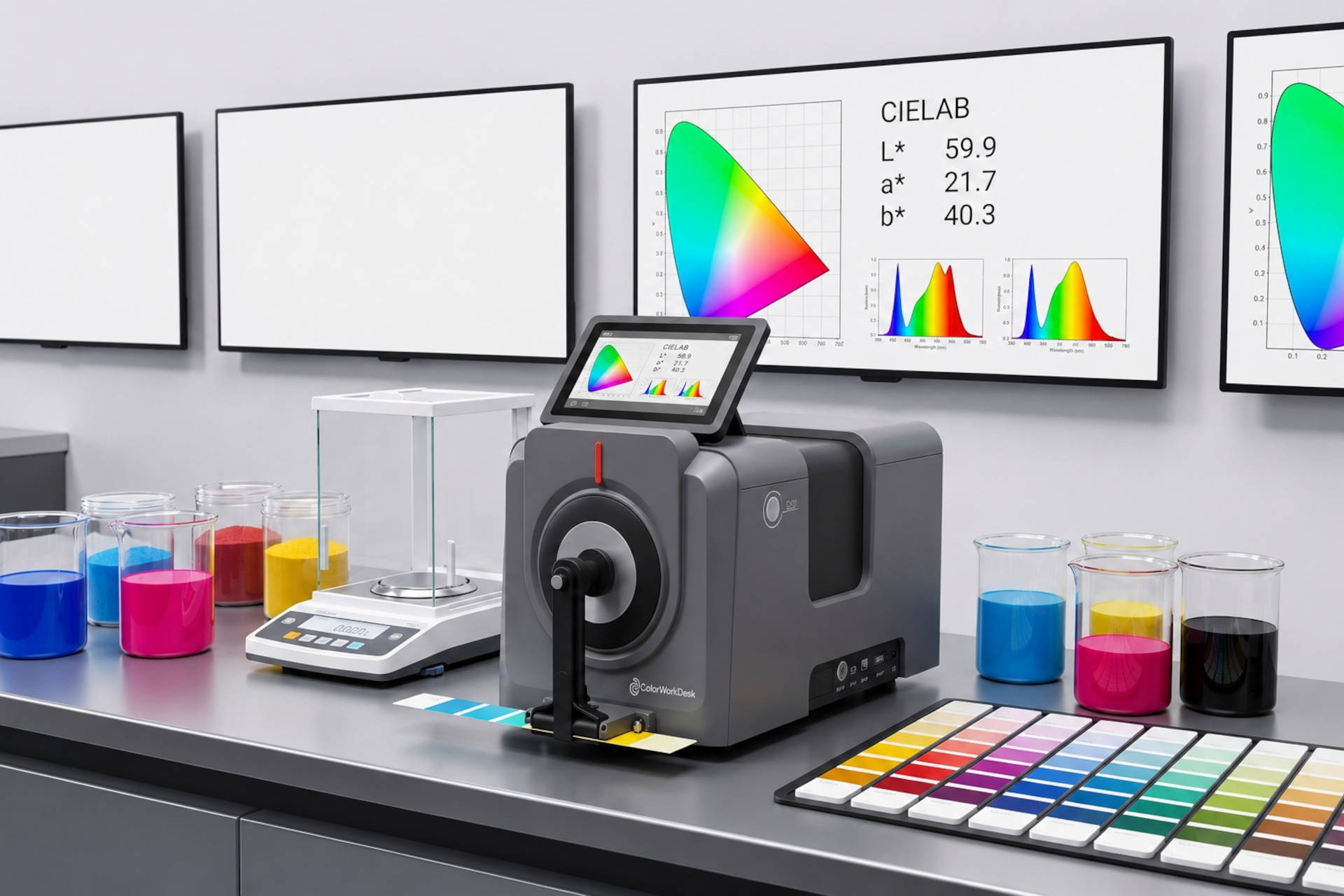
The combination of these elements allows the instrument to operate both as a benchtop spectrophotometer, designed for high-precision laboratory measurements, and as a portable spectrophotometer, designed for direct control in production or at the supplier’s site.
How does a Spectrophotometer work
The operation of a spectrophotometer follows a progressive process common to most instruments designed for industrial color measurement.
First, the illuminant illuminates the sample with a known reference light, distributed uniformly across the surface to be analyzed. As the light interacts with the material, it is partly absorbed and partly reflected or transmitted, depending on the physical and chemical characteristics of the surface.
The instrument’s probe collects this light component and sends it to the monochromator, which separates it into the different wavelengths within the visible range, typically between 400 and 700 nanometers.
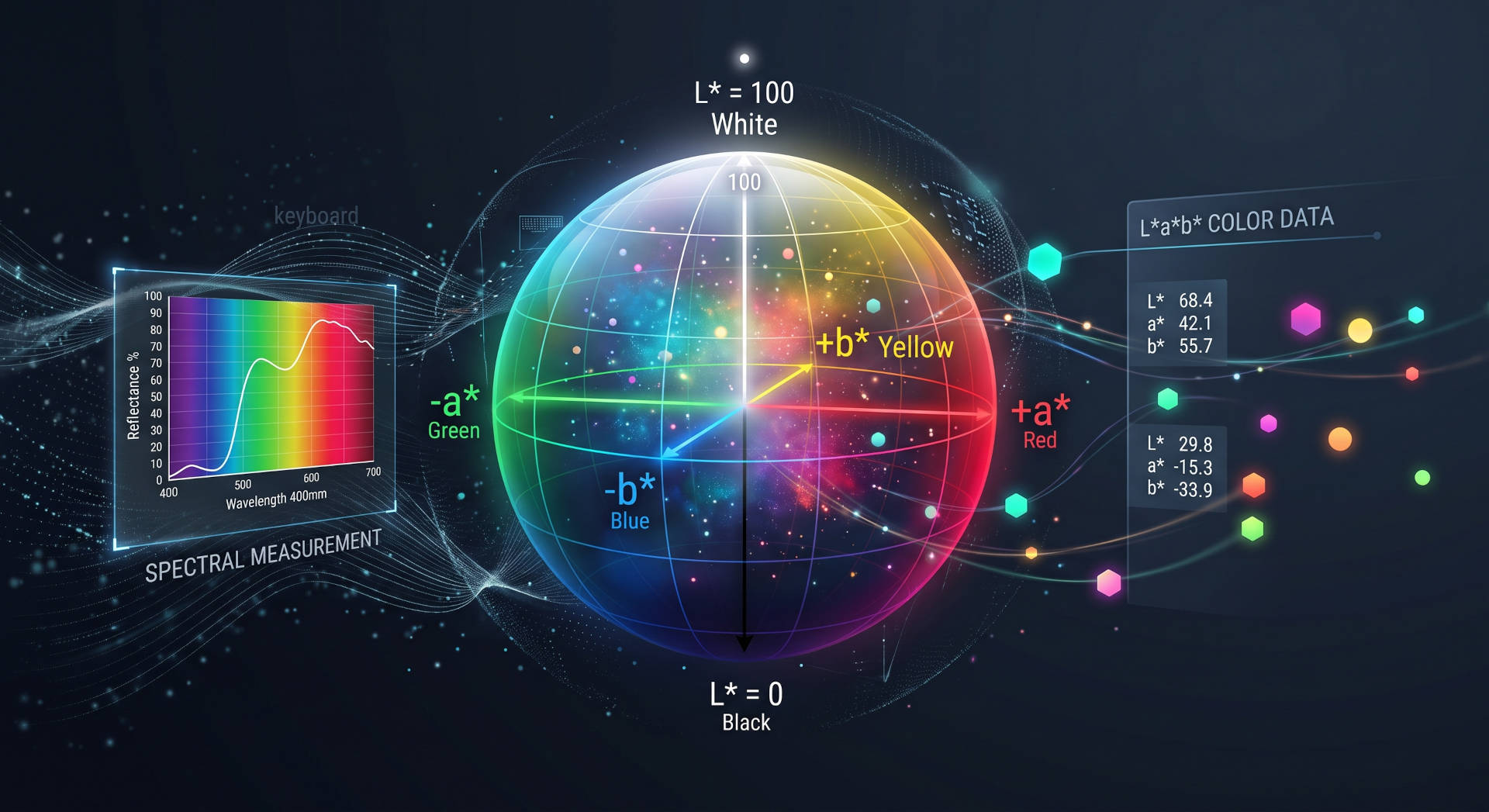
At this point, the detector measures the intensity of the light for each spectral interval, generating a series of data that the software transforms into a reflectance or transmittance curve. From this curve, the XYZ tristimulus values and CIELab color coordinates are then calculated, making it possible to position the measured color within a standardized color space and compare it accurately with other samples.
Since it is not possible to record a value for every individual wavelength, the instrument acquires data at regular intervals: the minimum interval required to obtain a unique spectral measurement is 20 nanometers, corresponding to 16 measurement points across the visible range.
Although it can technically reach up to 256 points, the most widely used processing software typically works with 31 points at 10-nanometer intervals: a level of detail considered to provide the optimal balance between accuracy and processing speed, sufficient to ensure reliable results in the vast majority of industrial colorimetric applications without slowing down in-line measurement times.
The collected spectral data are then converted into XYZ tristimulus values, which numerically express the response of the human eye to the red, green and blue components of reflected or transmitted light.
To obtain a representation closer to actual visual perception, these values are then mapped within the CIELab color space, where the L axis describes lightness, the a axis represents the red-green component, and the b axis the yellow-blue component: it is within this three-dimensional space that color differences, such as delta E, are calculated and used daily in industrial quality control.
In this process, benchtop spectrophotometers generally offer higher spectral resolution, making them ideal for validating color standards in the laboratory, while portable models prioritize speed and ease of use for direct checks on the production floor or in the field.
What are the types of Spectrophotometer: portable and benchtop models compared
The most relevant distinction in industrial applications is between the benchtop spectrophotometer and the portable spectrophotometer, two types of instruments designed for different application requirements.
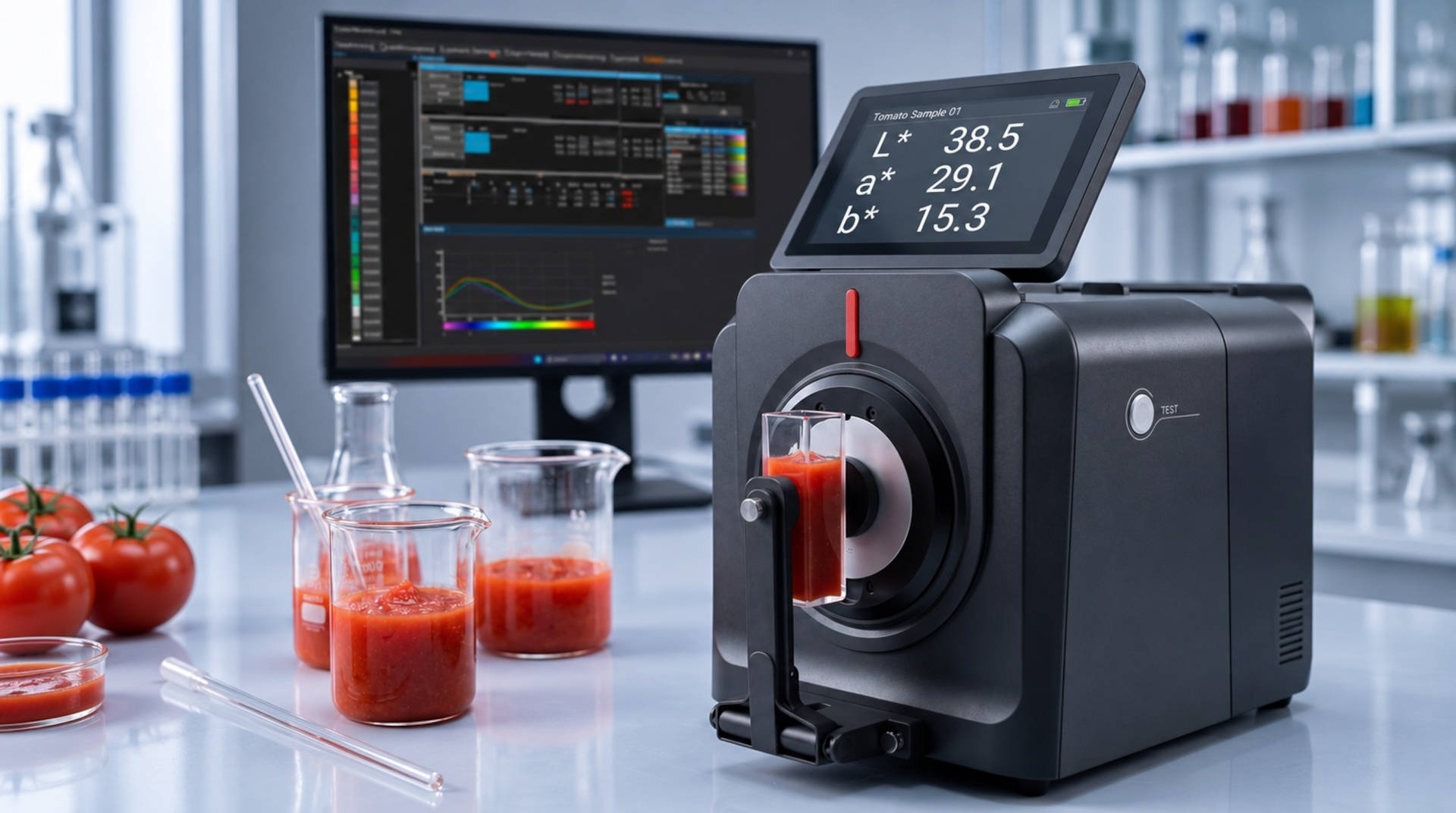
The benchtop spectrophotometer is designed for laboratory use, where measurement conditions can be kept constant and controlled. It generally offers greater accuracy, often thanks to a larger integrating sphere, and is the most suitable instrument for activities such as formulating new shades, validating color standards and creating reference color libraries.
The portable spectrophotometer, on the other hand, is designed to be used directly in production, in the warehouse or at the supplier’s site, without the need to take samples and send them to the laboratory.
Its lightweight design and fast measurement capabilities make it ideal for in-line controls, incoming goods inspections and all situations in which color needs to be evaluated directly where the product is manufactured or applied.
In general, a benchtop instrument is the preferred choice when maximum accuracy under controlled conditions is the priority, while a portable spectrophotometer is preferable when operational flexibility and the ability to measure color at multiple points along the production chain, including outside the laboratory, are required.
A common example is that of a company with multiple production facilities: the central laboratory uses a benchtop spectrophotometer to define and validate the official color standard, while individual departments or remote sites use portable spectrophotometers to independently and quickly verify that current production falls within the approved color tolerance.
How to use a Spectrophotometer: applications in industrial sectors
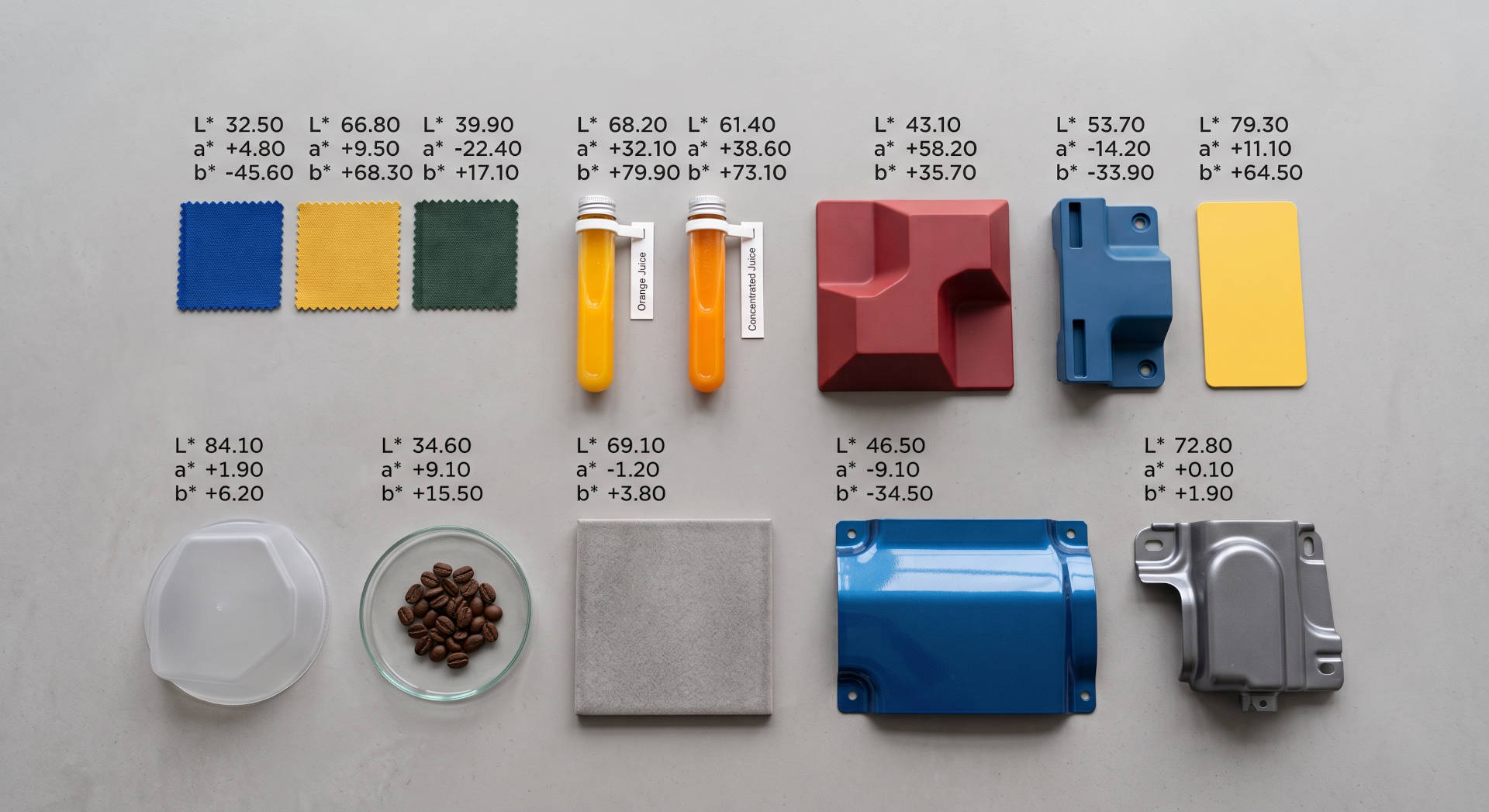
Beyond the technical aspects, the value of the spectrophotometer lies above all in how it is used across different industrial sectors, where color control directly affects the perceived quality of the product.
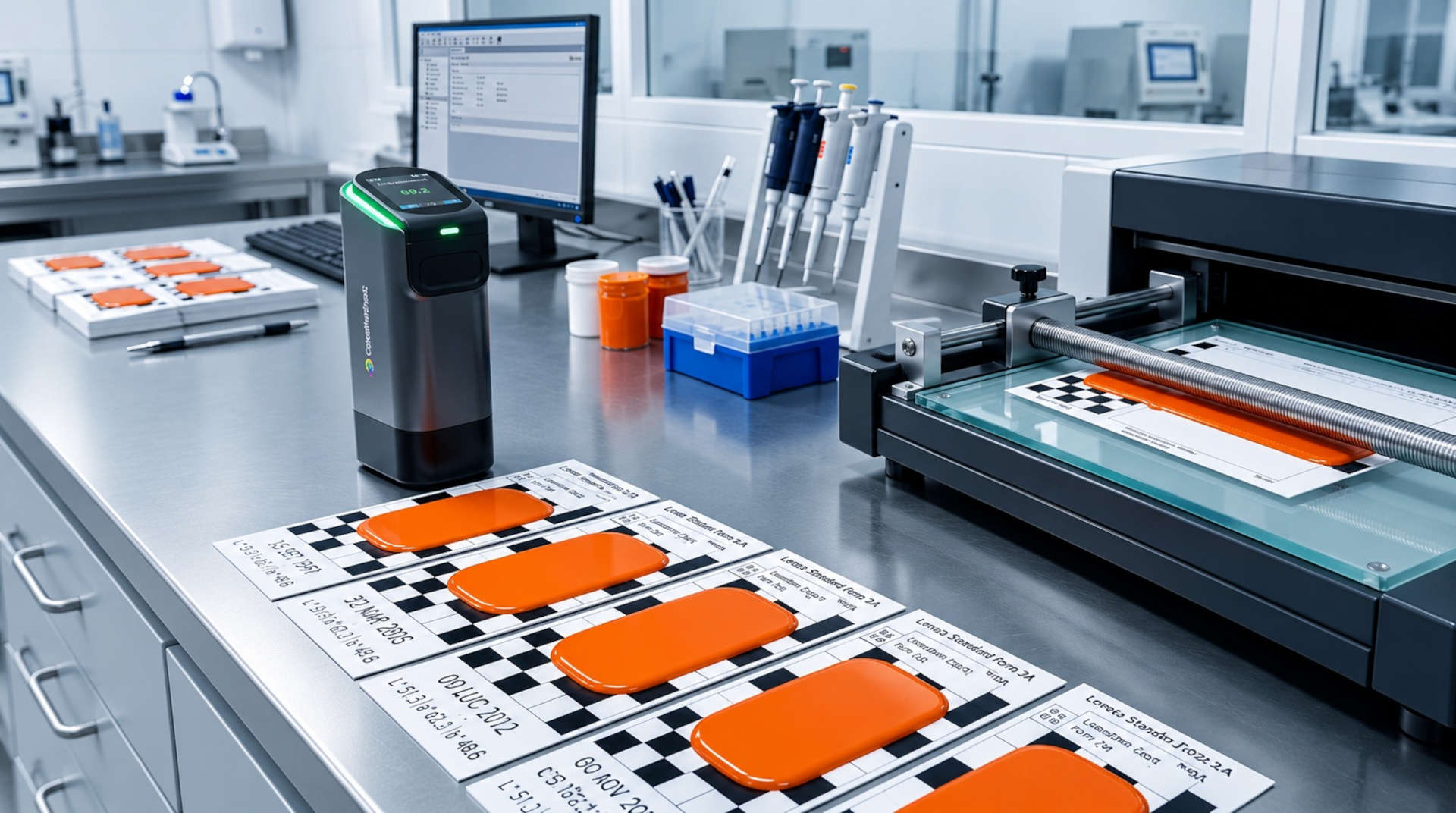
In the paints and coatings sector, the spectrophotometer is essential for verifying color consistency between production batches and supporting the formulation of new shades, reducing laboratory time and waste. One example is checking whether an RAL color requested by a customer meets the required specification before the batch is delivered, where an objective measurement helps avoid costly rework further down the line.
In the plastics sector, the instrument makes it possible to control the color of materials and molded or extruded products, ensuring color consistency even across different raw material suppliers.
In the textile and apparel sector, spectrophotometric measurement is essential for ensuring color consistency between yarns, fabrics and finished garments. This is particularly critical when production involves multiple facilities or subcontractors located in different geographical areas: sharing spectral data, rather than a physical fabric sample, allows brands and distant suppliers to approve a color much more quickly.
For the inks and packaging sector, the spectrophotometer ensures print color accuracy in relation to brand standards, a fundamental requirement for packaging intended for large-scale retail distribution.
In the cosmetics sector, the instrument supports the development and quality control of products such as foundations, lipsticks and eyeshadows, where color accuracy directly affects end-customer satisfaction.
In the leather industry, finally, the spectrophotometer makes it possible to monitor coloration during tanning and dyeing processes, helping maintain consistency between different batches of material.
A separate but equally relevant application is automotive refinishing, where the automotive refinishing spectrophotometer is used to accurately identify the original shade of a vehicle’s paint, even in the presence of variations caused by aging or UV exposure, reducing the margin of error when selecting the appropriate repair formula.
In all these contexts, the true value of the spectrophotometer lies not only in measurement accuracy, but also in the ability to make color conformity decisions based on objective and shared criteria, rather than on the experience or perception of an individual operator.
The strategic role in color management
The spectrophotometer should not be seen merely as a measuring instrument, but as the element that transforms color from a subjective perception into objective, measurable and shareable data throughout the entire production chain.
In an industrial context increasingly focused on traceability and quality standardization, being able to express color with a number rather than a visual impression represents a concrete competitive advantage: it means fewer disputes, less downtime and greater trust among all parties involved in the supply chain.
Relying on instrumental color measurement, rather than visual assessment alone, means reducing waste, speeding up sample approval processes and ensuring color consistency throughout the entire production chain, from formulation to the finished product.
Ultimately, the value of the spectrophotometer is not only technical but also organizational: it is the instrument that allows laboratories, production departments, suppliers and customers to literally speak the same language of color.

FAQ
How much does a spectrophotometer cost?
The cost of a spectrophotometer can vary significantly depending on the type of instrument, measurement geometry and required level of performance. Portable spectrophotometers designed for production or field control generally have a lower entry cost, while benchtop instruments for laboratory use, equipped with an integrating sphere and higher spectral resolution, require a greater investment. Other factors that affect the price include the measurement geometry (d/8, 45/0), whether the specular component is included or excluded, connectivity with color management software and the level of accuracy required by the specific application. For an industrial company, the choice should not be based solely on the purchase price, but also on operating and calibration costs and on the actual return in terms of reducing waste and returns caused by color non-conformities.
What is the difference between a spectrometer and a spectrophotometer?
A spectrometer is a more general term referring to any instrument capable of measuring the distribution of light energy as a function of wavelength, including applications outside the field of color measurement. A spectrophotometer, on the other hand, is a specific instrument that, in addition to separating light into its different wavelengths, relates it to the intensity of a reference source, directly calculating reflectance or transmittance values. In industrial colorimetry, when referring to color measurement, the correct term is spectrophotometer, as it is the instrument capable of providing spectral data that can be used to calculate standardized color coordinates such as CIELab.
What is the best spectrophotometer?
There is no single spectrophotometer that is best in every situation, but rather an instrument that is better suited to a specific application. In the laboratory, for color formulation and the validation of color standards, a benchtop spectrophotometer with an integrating sphere is generally preferable, as it can ensure maximum repeatability. In production environments, where speed and mobility are required, a portable spectrophotometer is often more practical, provided that it offers an appropriate level of accuracy for the relevant application. Other decisive criteria include the measurement geometry best suited to the type of surface, compatibility with the color management software already used by the company and the availability of reliable service and calibration support over time.
What is the difference between a colorimeter and a spectrophotometer?
A colorimeter measures color through only three channels, corresponding to the stimuli perceived by the human eye for red, green and blue, providing a synthetic colorimetric value but with less detail. A spectrophotometer, on the other hand, captures the entire spectral curve of a sample across a significantly higher number of points, at least 16, providing a much more complete description of the material’s optical properties. There is also an intermediate category, the spectrocolorimeter, which typically operates with around 8 measurement points. This difference results in a decisive practical advantage: only a spectrophotometer allows colorimetric data to be recalculated under different illuminants and makes it possible to detect phenomena such as metamerism. For this reason, it is the reference instrument in industrial environments where color accuracy is a quality requirement.
What is the purpose of the white reference in a spectrophotometer?
The white reference is a certified and traceable ceramic or PTFE tile used as the basis for calculating all subsequent instrument measurements. Since a spectrophotometer operates comparatively, relating the light reflected by a sample to that reflected by a known reference, the white reference represents the maximum reflectance value against which all other readings are expressed as percentages. Without this reference, the instrument would have no stable basis for calculating spectral data consistently, and measurements would not be comparable between different sessions, operators or instruments, compromising the reliability of color quality control.
What are the two spectroscopic quantities that a spectrophotometer can measure?
A spectrophotometer fundamentally measures two quantities: reflectance, which is the percentage of light reflected by an opaque or semi-opaque material compared with the incident light, and transmittance, which is the percentage of light that passes through a transparent or semi-transparent material. Both quantities are calculated across the entire visible spectrum and provide the basis for all subsequent colorimetric calculations, from CIELab coordinates to color difference indices. The choice between the two measurement modes depends on the physical nature of the sample: reflectance is used for paints, textiles and opaque plastics, while transmittance is suitable for glass, films and liquids.
What is the difference between spectroscopy and a spectrophotometer?
Spectroscopy is the scientific discipline that studies the interaction between electromagnetic radiation and matter, encompassing a very broad range of techniques and instruments used in physics, chemistry and other scientific fields. A spectrophotometer, on the other hand, is a specific instrument that applies the principles of spectroscopy to the quantitative measurement of light reflected or transmitted by a sample. In other words, spectroscopy provides the theoretical and methodological framework, while the spectrophotometer is one of the practical instruments through which this discipline finds concrete application, particularly in the field of industrial colorimetry for color control.
Who invented the spectrophotometer?
The patent for the spectrophotometer was registered in January 1935 by Arthur C. Hardy, a researcher at the Massachusetts Institute of Technology, who developed the first instrument capable of automatically recording the spectral reflectance and transmittance curves of materials. The field underwent significant developments in the following years: in 1941, Arnold Beckman introduced the first commercial spectrophotometers for analytical applications, while from 1967 onwards, instruments began to be connected to digital computers, paving the way for the automatic processing of colorimetric data. From the late 1970s, the spread of microprocessors made it possible to miniaturize instruments, leading to the development of the modern portable spectrophotometers used in industrial applications today.
What does zeroing a spectrophotometer mean?
Zeroing a spectrophotometer means carrying out a preliminary calibration procedure in which the instrument measures two known reference conditions: the absence of reflected light, obtained using a light trap, and the maximum known reflectance, obtained using a certified reference tile. This procedure allows the instrument to define the two extremes of its measurement scale, correcting for possible drift caused by variations in the light source, wear of optical components or environmental conditions. Zeroing should be repeated at regular intervals, according to the manufacturer’s instructions, to ensure that measurements remain accurate and comparable over time.
What is the difference between a spectroscope and a spectrophotometer?
A spectroscope is an optical instrument that makes it possible to observe and separate light into its spectral components, primarily for qualitative purposes, without providing a precise quantitative measurement of light intensity at different wavelengths. A spectrophotometer, on the other hand, does not simply observe light but accurately quantifies the intensity of reflected or transmitted light, providing numerical data that can be used for objective colorimetric calculations. This difference is decisive in industrial applications: while a spectroscope is mainly used for educational purposes or preliminary diagnostics, only a spectrophotometer provides the data required for color quality control and standardization throughout the production chain.
What is a spectrophotometer detector?
The detector is the component of a spectrophotometer responsible for converting the light collected by the probe into a measurable electrical signal. In most spectrophotometers for colorimetric applications, this function is performed by silicon photodiodes or sensor arrays, each dedicated to a specific portion of the visible spectrum after the light has been separated by the monochromator. The greater the number of detector elements, the more detailed the resulting spectral curve can be. The electrical signal generated is then digitized and processed by the instrument’s software, which converts it into reflectance or transmittance values and subsequently into the colorimetric coordinates used for color control.
What is the purpose of white calibration in a spectrophotometer?
White calibration is used to establish the maximum reference reflectance value against which the instrument expresses all subsequent measurements as percentages. Unlike the general zeroing procedure, which also includes black calibration, this specific step compensates for variations in the light source and internal optical components, helping ensure that two different spectrophotometers calibrated against the same certified reference provide comparable results. For this reason, the use of traceable and periodically recertified reference tiles is essential for maintaining the metrological reliability of the instrument, particularly when measurements need to be compared between different production sites or suppliers.
What is a spectrophotometer used for in automotive refinishing?
In automotive refinishing, a spectrophotometer is used to accurately identify the original shade of a vehicle’s paint, even when color variations have occurred due to aging, UV exposure or previous painting work. Thanks to spectral measurement of the painted surface, the instrument helps identify the repair formula that most closely matches the actual color, reducing the margin of error compared with the colorist’s visual assessment alone. The use of portable spectrophotometers is particularly effective in this context, as it allows measurements to be taken directly on the vehicle in the workshop, without the need to remove samples or interrupt the workflow.
What is delta E in a spectrophotometer?
Delta E is the numerical index that expresses the perceived difference between two colors measured with a spectrophotometer, calculated from their respective coordinates in the CIELab color space. A delta E value close to zero indicates an almost perfect color match, while increasing values indicate progressively more noticeable deviations from the reference standard. In industrial processes, delta E is used to define objective tolerance thresholds beyond which a production batch is considered non-compliant. The most widely used calculation formulas, such as Delta E CIE94 or CIEDE2000, take human visual perception into account more accurately than the original formula.
How is a spectrophotometer calibrated?
Calibrating a spectrophotometer generally involves two main steps: measuring a light trap or a condition with no reflection to define the instrument’s zero point, and measuring a certified white reference tile to define the maximum value of the measurement scale. This procedure, usually guided by the instrument’s software, should be carried out when the instrument is switched on and repeated at regular intervals during use, according to the manufacturer’s instructions. It is also good practice to subject the instrument periodically to more thorough metrological checks using sets of certified colored reference tiles, to ensure that calibration remains stable over time and measurements remain comparable between different departments, sites and suppliers.
What is the light source of a spectrophotometer?
The light source, or illuminant, is the component that generates the light used to illuminate the sample during measurement. Spectrophotometers for colorimetric applications generally use pulsed xenon lamps, halogen lamps or LED sources, each with different characteristics in terms of stability, service life and spectral power distribution. Since color perception also depends on the type of light under which an object is observed, the instrument’s software can mathematically simulate the behavior of a sample under different standard illuminants, such as D65 or A, making it possible to identify potential metamerism before the product reaches the end customer.

Subscribe to newsletter
You might be interested
Color Mixing and Color Correction in Industrial Processes
Color mixing and color correction are two essential operations in ...

ColorWorkDesk: How to Choose a Spectrophotometer
When it comes to choosing a spectrophotometer, the first step ...

ColorWorkDesk: The Innovative Software for Colour and Paint Management
The colourimetry sector, increasingly influenced by digital innovations, required a ...

ColorWorkDesk CWD Server: The software that provides colourimetry services
ColorWorkDesk CWD Server leverages server/cloud technology to centrally manage colour ...
Colour Models in Industry: the science behind chromatic perfection
Colour communication represents a fundamental challenge for companies operating in ...
Ask for a free consultation
Our experts will contact you to show you a demo of our products