


21-04-2026
Inside the Colour Spectrum: from light to quality in Industrial processes
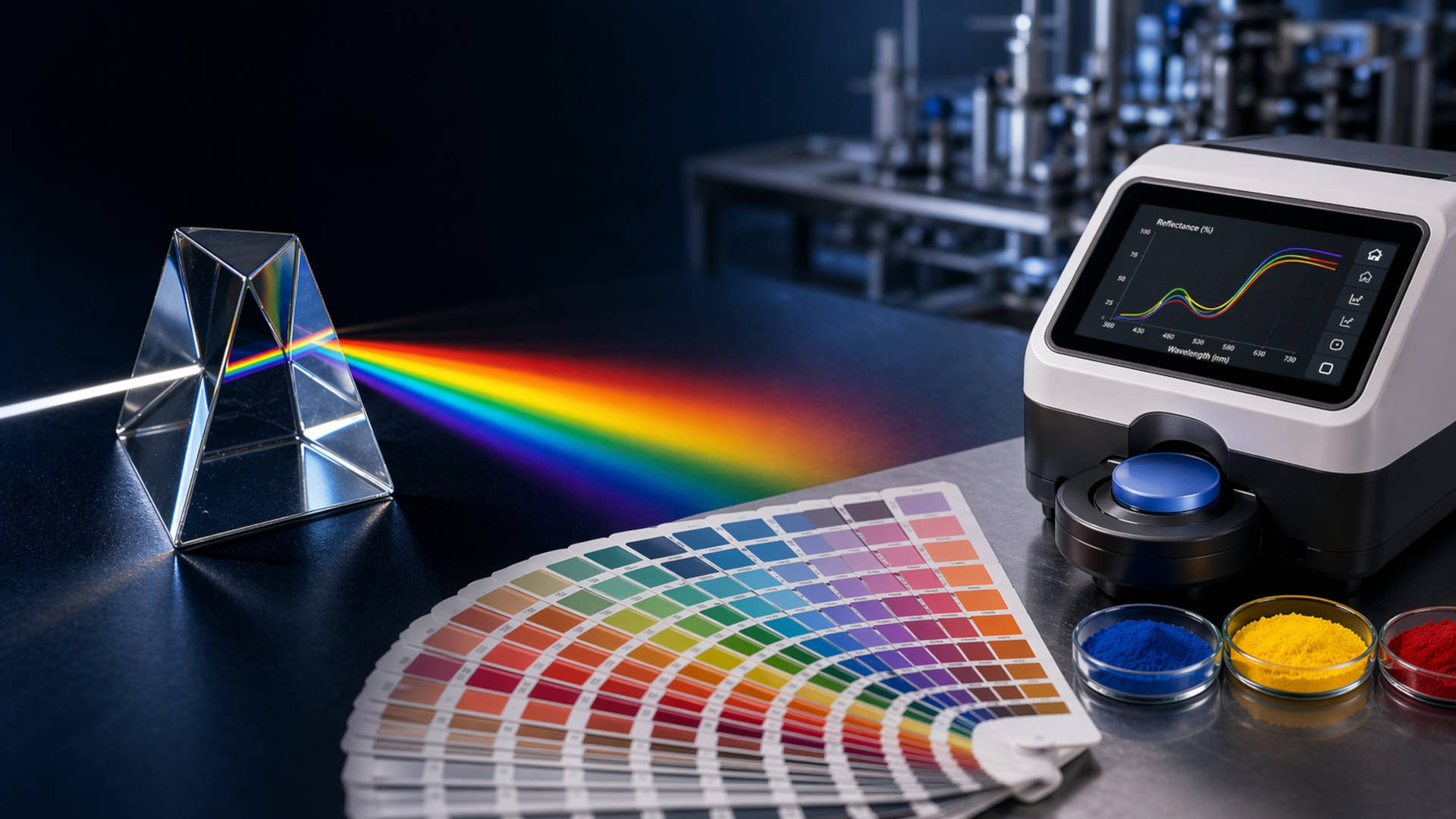
The colour spectrum is one of the fundamental concepts of optical physics and, at the same time, an essential operational tool across numerous industrial sectors.
From the production of paints and coatings to quality control in textiles, from printing to the food industry, the ability to analyse, measure, and reproduce colour with precision depends on a solid understanding of the colour spectrum.
In many production contexts, inaccurate colour management can lead to production waste, returns, and additional costs, making colour spectrum control a strategic as well as technical factor.
In this article, we explore what is meant by the visible colour spectrum, how the science behind it has evolved, and which tools enable effective and reliable use today.
What is the Colour Spectrum
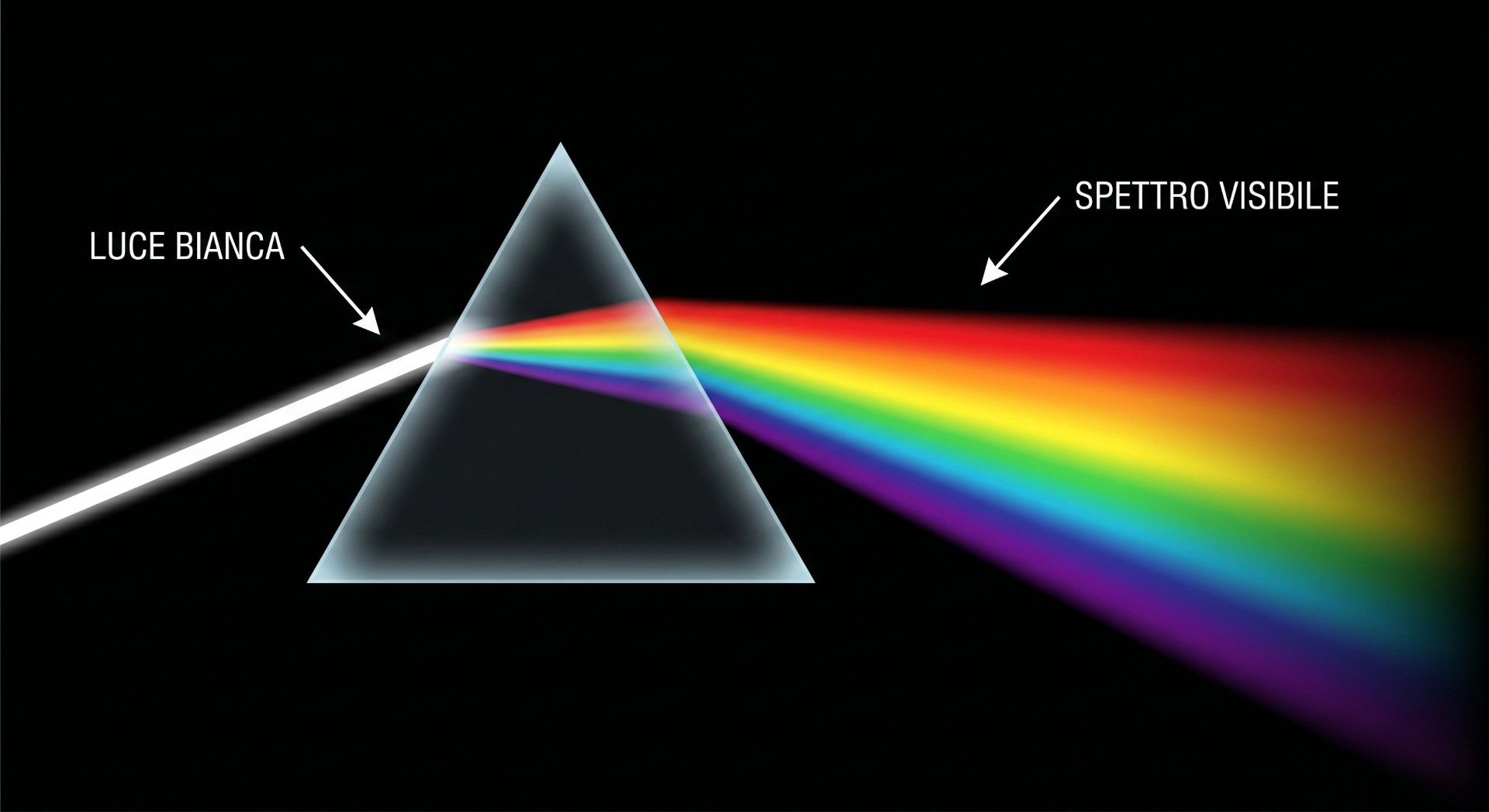
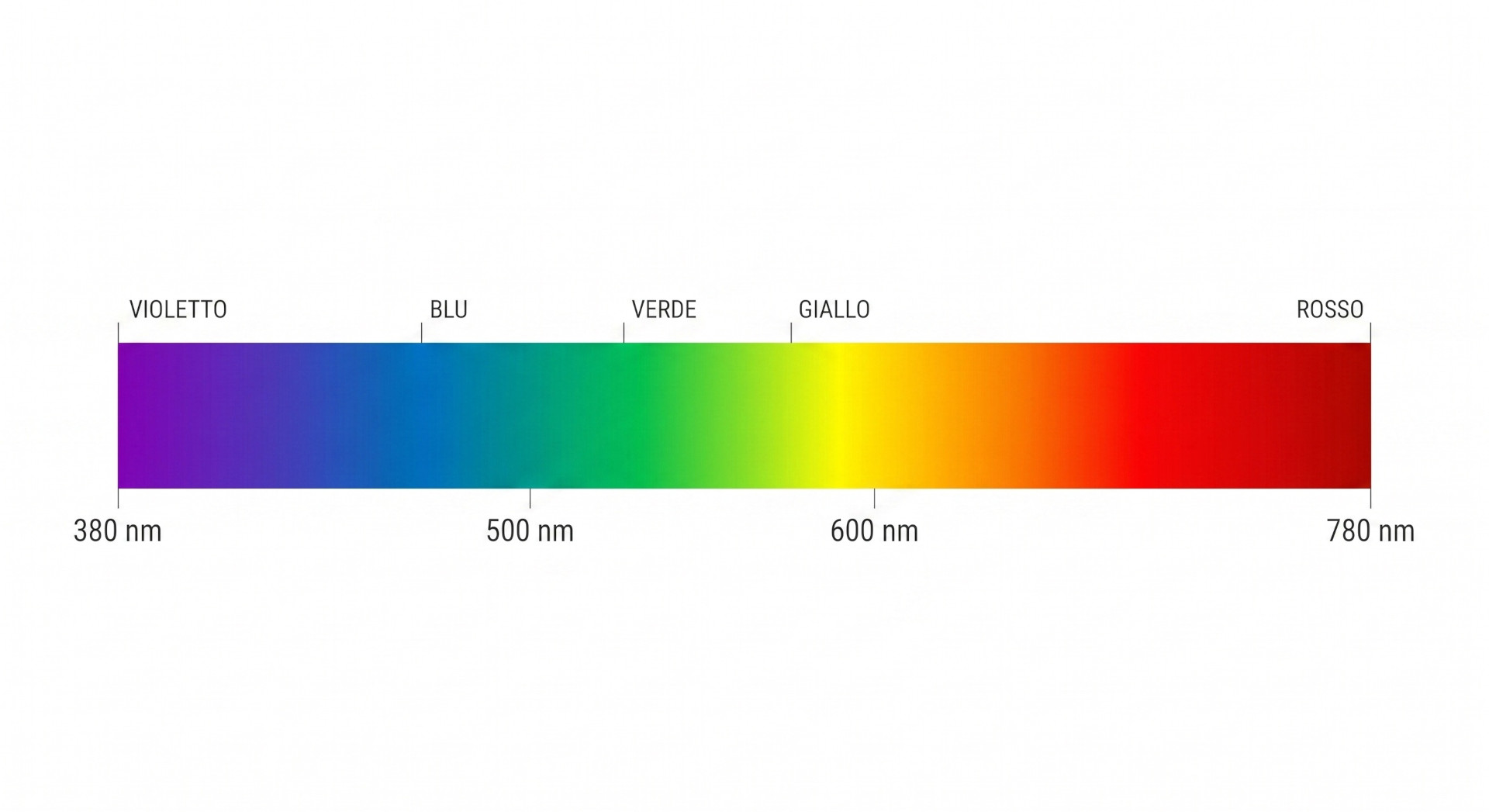
When white light passes through a prism or is diffracted by a surface, it splits into its monochromatic components, revealing a continuous sequence of hues ranging from violet to red.
This is the visible colour spectrum: the portion of the electromagnetic spectrum that the human eye can perceive, ranging from approximately 380 to 700 nanometers in wavelength.
It is useful to distinguish two main types of light spectrum:
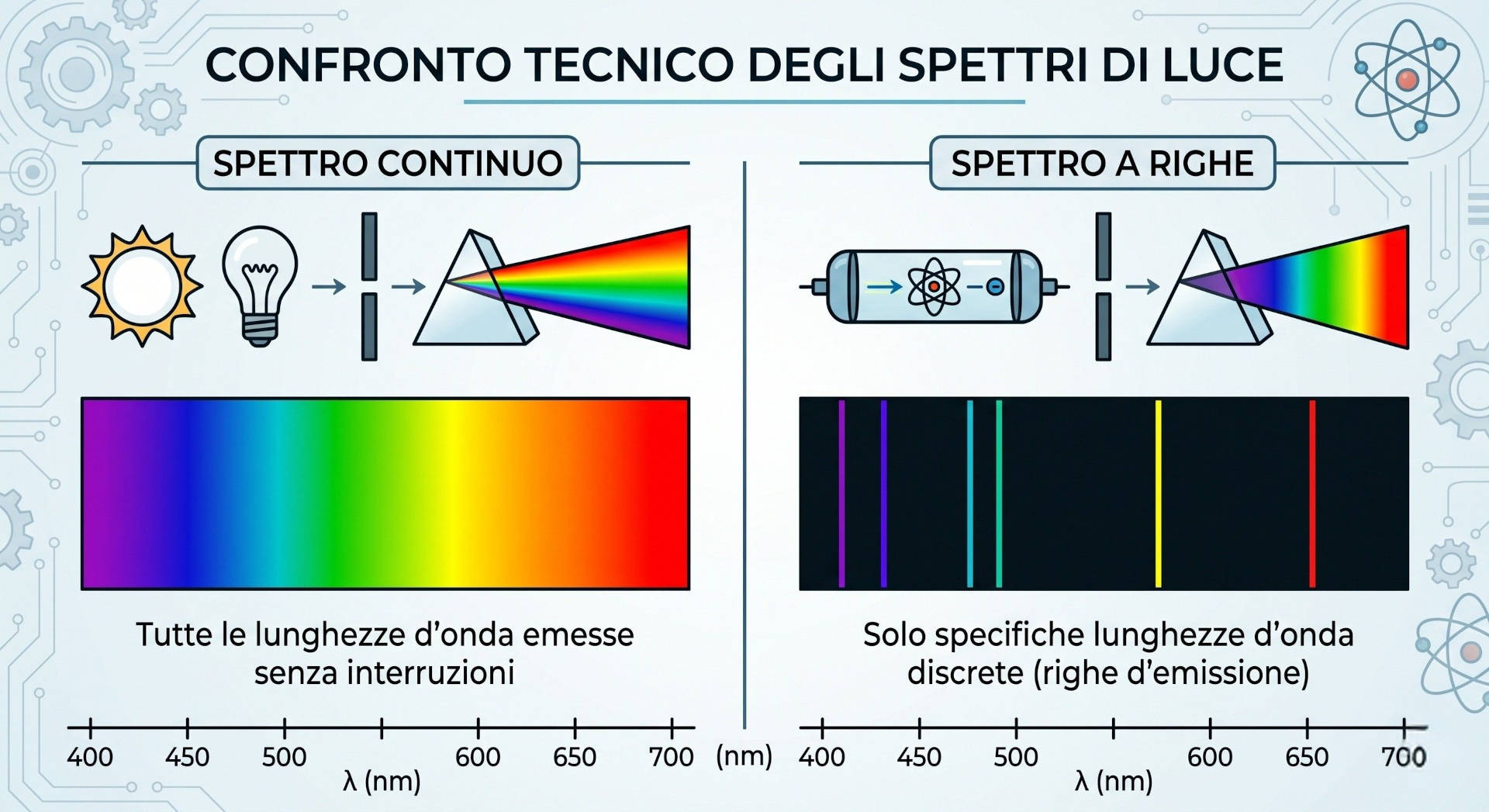
- Continuous spectrum: typical of sunlight and many incandescent sources, where all wavelengths are present without interruption. It produces the classic rainbow of smoothly transitioning colours.
- Discrete (or line) spectrum: characteristic of artificial sources such as vapor lamps or LEDs, which emit light only at specific wavelengths. This type of spectrum is fundamental in industrial spectroscopic analysis, as it allows precise identification of the composition of a light source or material.
This distinction is not only theoretical: in industrial practice, the quality of the light source used during colour measurement directly affects the reproducibility of results.
For this reason, international standards, such as those defined by the CIE (Commission Internationale de l’Éclairage), specify reference illuminants for each application context.
Who discovered the Colour Spectrum: from classical physics to modern colourimetry
The discovery of the colour spectrum is commonly attributed to Isaac Newton, who in 1666 experimentally demonstrated that white light is composed of multiple colours through the well-known prism experiment.
Newton identified seven fundamental colors of the spectrum: violet, indigo, blue, green, yellow, orange, and red—a classification that is still part of common language today.
However, modern understanding of color goes far beyond Newton. In the 19th century, scientists such as Thomas Young and Hermann von Helmholtz developed the trichromatic theory of vision, explaining how the human eye perceives color through three types of receptors sensitive to different wavelengths.
It was in the 20th century that colorimetry became a structured scientific discipline: in 1931, the CIE published the first standardized color measurement system, introducing reference colorimetric observers and the CIE XYZ color space, still the basis of most international color standards today.
This system enabled objective communication of color between companies, suppliers, and laboratories worldwide, laying the foundation for modern industrial colorimetry.
What is the Color Spectrum used for in Industrial applications
In industrial contexts, the colour spectrum is not an abstract concept but an operational tool with direct implications for product quality and process efficiency.
Companies working with coloured materials—whether paints, plastics, textiles, inks, or food products—need to manage colour in a systematic and verifiable way.
The main industrial applications of the colour spectrum include:
- Quality control: ensuring that the colour of the finished product falls within specified tolerances, avoiding visible defects or production waste.
- Colour standardization: ensuring that the same colour is reproduced consistently regardless of production line, facility, or geographic region.
- Batch colour matching: comparing production samples from different supplies to ensure colour consistency.
- Error reduction: proactively correcting colour deviations during production, reducing waste and costly rework.
In all these contexts, instrumental colour measurement, based on reflectance or transmittance spectrum analysis, replaces or complements subjective visual evaluation, providing objective and comparable data over time.
How the Colour Spectrum works: wavelengths, reflectance and visual perception
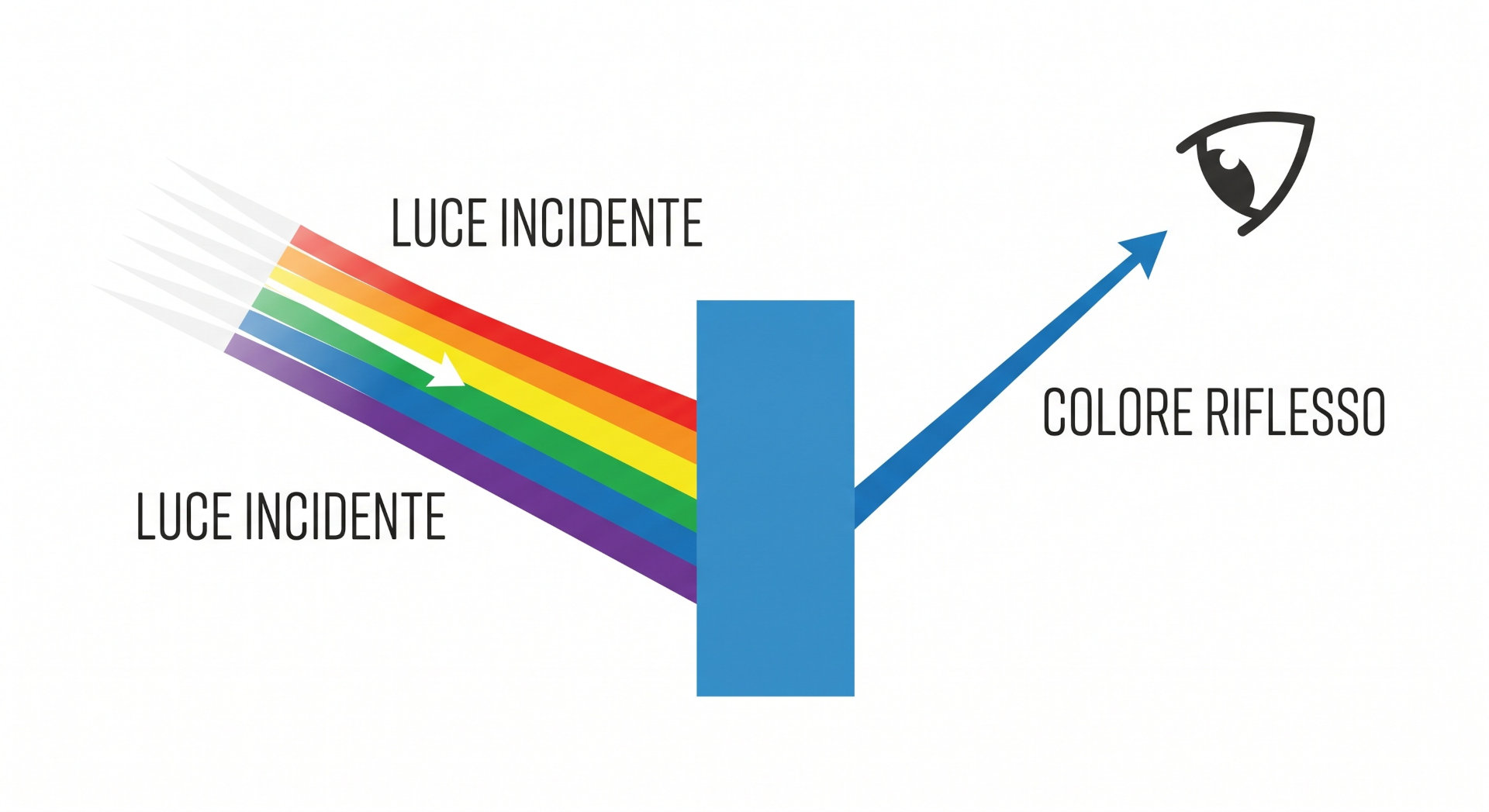
The colour we perceive when observing an object is not an intrinsic property of that object: it is the result of the interaction between incident light, the optical properties of the surface, and the response of the human visual system.
Understanding this mechanism is essential for working effectively with the colour spectrum.
The visible electromagnetic spectrum ranges from approximately 380 nm (violet) to 700 nm (red).
Within this range, each wavelength corresponds to a specific colour perception:
- 380–450 nm: violet and purple,
- 450–495 nm: blue,
- 495–570 nm: green,
- 570–620 nm: yellow and orange,
- 620–700 nm: red.
When light hits a surface, part of it is absorbed and part is reflected. The reflectance profile—that is, the percentage of reflected light at each wavelength—determines the perceived color. Similarly, for transparent or translucent materials, transmittance is measured.
These spectral data form the basis for spectrophotometers: instruments capable of measuring the optical response of a sample across the entire visible spectrum with nanometric precision.
Unlike visual evaluation, which varies from operator to operator and depends on lighting conditions, spectrophotometric measurement is reproducible, objective, and compliant with international standards such as ISO 13655 for graphics or ISO 7724 for coatings.
This approach allows a perceptual phenomenon to be translated into measurable data, directly usable in quality control and industrial standardisation processes.
Types of Spectrum: visible, electromagnetic, and colour models
When discussing the “colour spectrum,” confusion often arises between distinct physical concepts. It is useful to clarify the differences between the main categories.
The visible spectrum is the portion of the electromagnetic spectrum perceptible to the human eye, ranging from 380 to 700 nm. Beyond these limits lie ultraviolet (UV) and infrared (IR) radiation, invisible to the eye but relevant in many industrial applications, from fluorescence to thermal control.
The electromagnetic spectrum as a whole includes all forms of radiation, from radio waves to gamma rays, with very different frequencies and wavelengths. In industrial contexts, knowledge of the entire spectrum is important in fields such as sensing, non-destructive testing, and chemical analysis.
Separate from these physical concepts, but often mentioned in this context, is the topic of colour models.
RGB (Red, Green, Blue) and CMYK (Cyan, Magenta, Yellow, Key) are not types of spectrum in the physical sense, but conventional systems for representing and reproducing colour in digital and print environments.
Their relationship with the visible spectrum is indirect: both attempt to simulate human colour perception through combinations of primary stimuli, but neither can reproduce the entire colour range of the visible spectrum.
For this reason, in industrial colourimetry, it is preferable to work directly with spectral data rather than RGB or CMYK values, which are device-dependent and have no absolute value.
Tools for working with the Colour Spectrum: spectrophotometer vs colourimeter
In industrial practice, there are two main categories of instruments for colour measurement, often mentioned together but with distinct characteristics and applications.
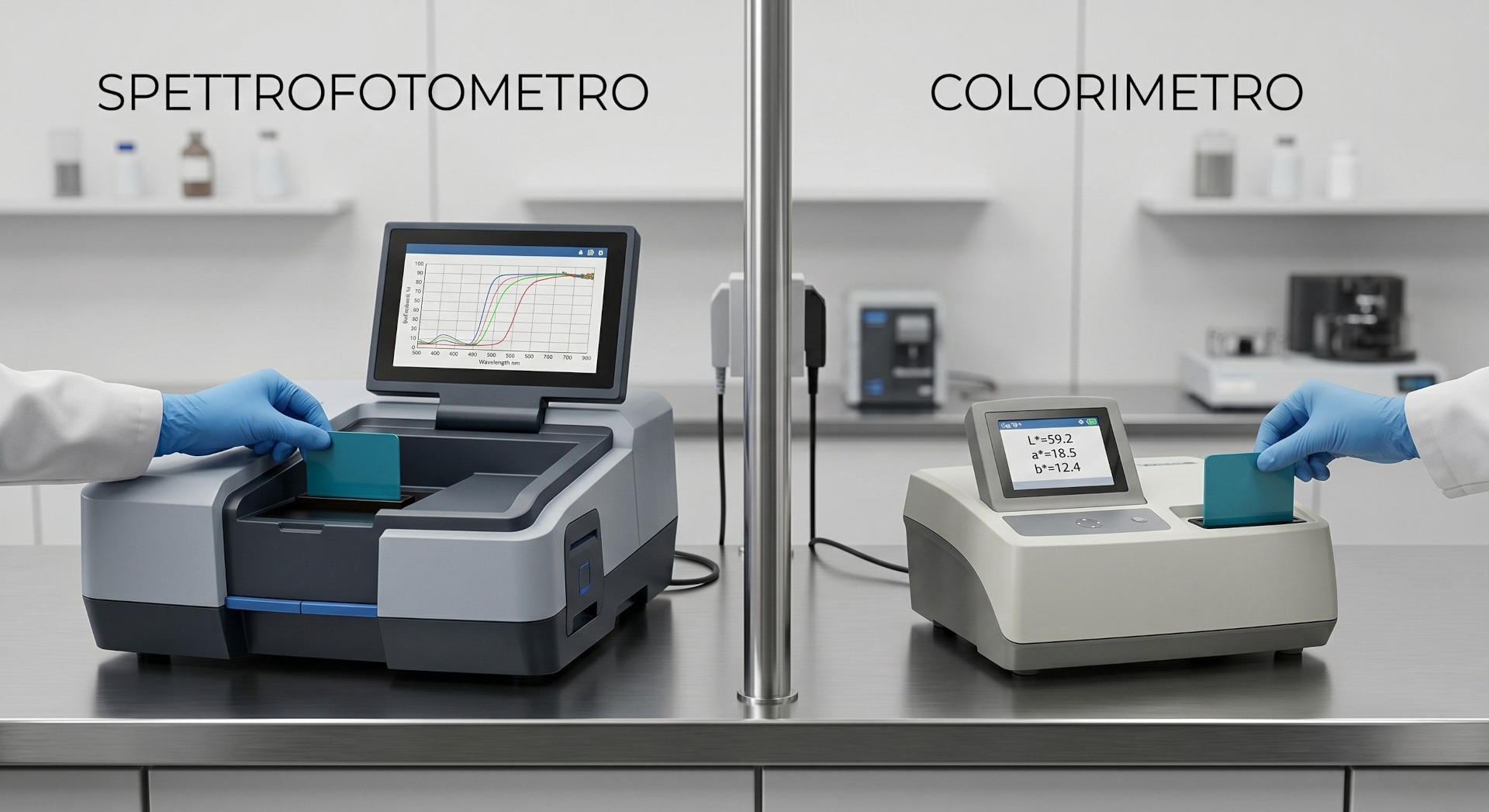
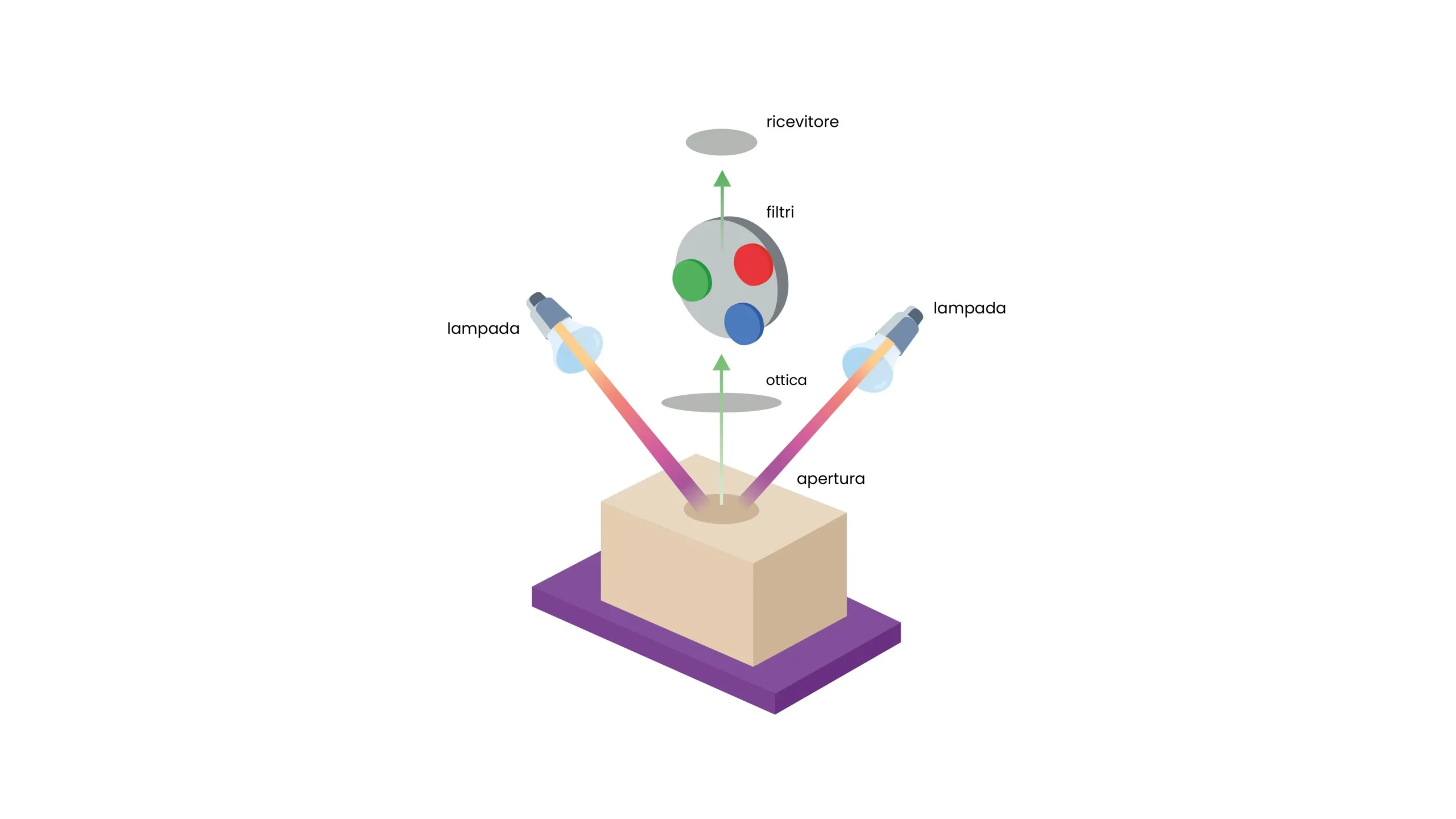
The colourimeter is a relatively simple instrument that measures colour by simulating the human eye response through three filters corresponding to photoreceptor sensitivities. It provides numerical values in a colour space (typically CIE Lab* or CIE XYZ) but does not provide the full spectral curve. It is suitable for quick colour conformity checks on homogeneous surfaces, especially when measurement conditions remain constant.
The spectrophotometer, on the other hand, analyzes the sample wavelength by wavelength across the entire visible spectrum, providing the complete reflectance or transmittance curve.
This makes it the reference instrument for more complex and critical applications:
- Paints and coatings: verifying colour consistency between batches and with reference standards.
- Plastics: monitoring colour stability after molding processes or UV exposure.
- Textile industry: matching dyes across fibers with different spectral absorption properties.
- Food industry: monitoring colour as an indicator of quality, ripeness, or spoilage.
The quality of measurement also depends on parameters such as the illuminant used, measurement geometry, and instrument calibration—key aspects for ensuring repeatable and comparable results over time.
The choice between the two instruments depends on the required level of accuracy and the complexity of the process.
In general, whenever it is necessary to communicate colour unambiguously with suppliers or customers, or when dealing with materials affected by metamerism (objects that appear identical under one light but different under another), the spectrophotometer is the essential tool.
Why the Colour Spectrum is strategic for Industry
The colour spectrum is much more than a fascinating optical phenomenon: it is the scientific foundation on which colour management in industrial contexts is built.
From the definition of CIE colour standards to the measurement of spectral reflectance, every phase of the quality control process is based on principles derived from understanding the colour spectrum.
For companies working with coloured materials, having calibrated professional instruments that comply with international standards is not an option: it is a requirement for efficiency, consistency, and competitiveness.
Knowing what to measure, how to interpret spectral data, and which tools to use based on the specific production context is the first step in transforming colour from a critical variable into a controlled element.
In this context, the adoption of advanced tools and standardized methodologies represents a concrete competitive advantage for all companies that treat colour as a critical variable.

Subscribe to newsletter
You might be interested

ColorWorkDesk: Measuring Colour with Spectrophotometers
The study of colour is a more complex field than ...

The Spectrophotometer: measuring color beyond visual perception
In industrial quality control, measuring color objectively is often more ...
The Colourimeter: precision and Colour control in industrial applications
Unlike the subjective perception of the human eye, this precision ...

Color Attributes: Hue, Chroma and Lightness in Industrial quality control
When a company decides to establish a color standard for ...

Colour Spectrophotometry: reading colour through light
Colour Spectrophotometry is today one of the most reliable and ...
Ask for a free consultation
Our experts will contact you to show you a demo of our products