


17-03-2026
The Densitometer in ink control: measurement, operation, and applications in industrial printing
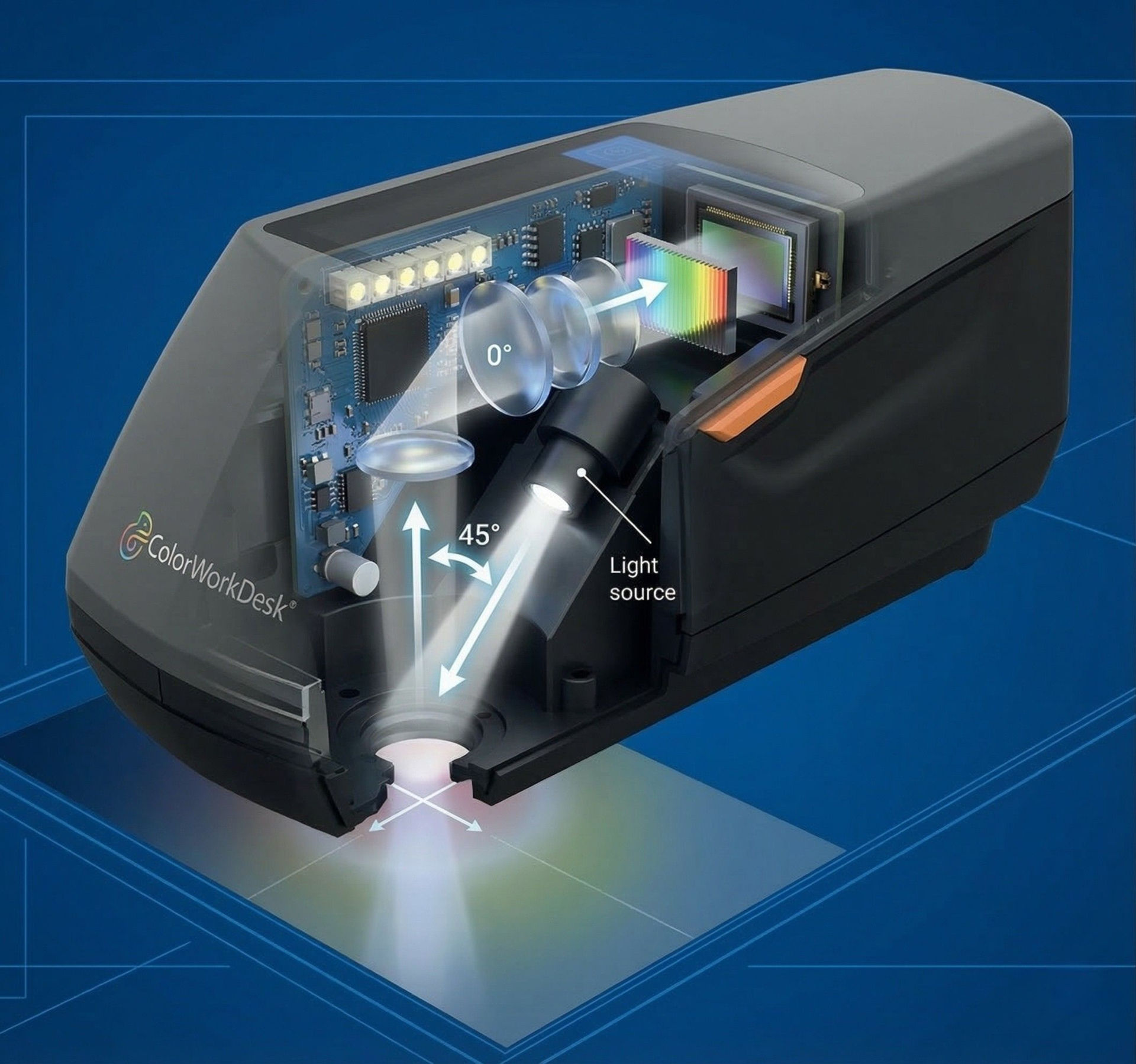
The ability to accurately measure ink behavior during the printing process is one of the key factors distinguishing controlled industrial production from a process relying solely on the operator’s eye.
The densitometer is the instrument that made this transition possible: an optical measuring device capable of objectively quantifying the amount of ink deposited on a substrate, translating a physical quantity into a reproducible and comparable numerical value.
In offset printing and, more generally, in high-volume industrial printing, densitometric measurement still represents a fundamental pillar of process control.
What is a Densitometer
The densitometer is an optical measuring instrument designed to detect the optical density of a printed surface.
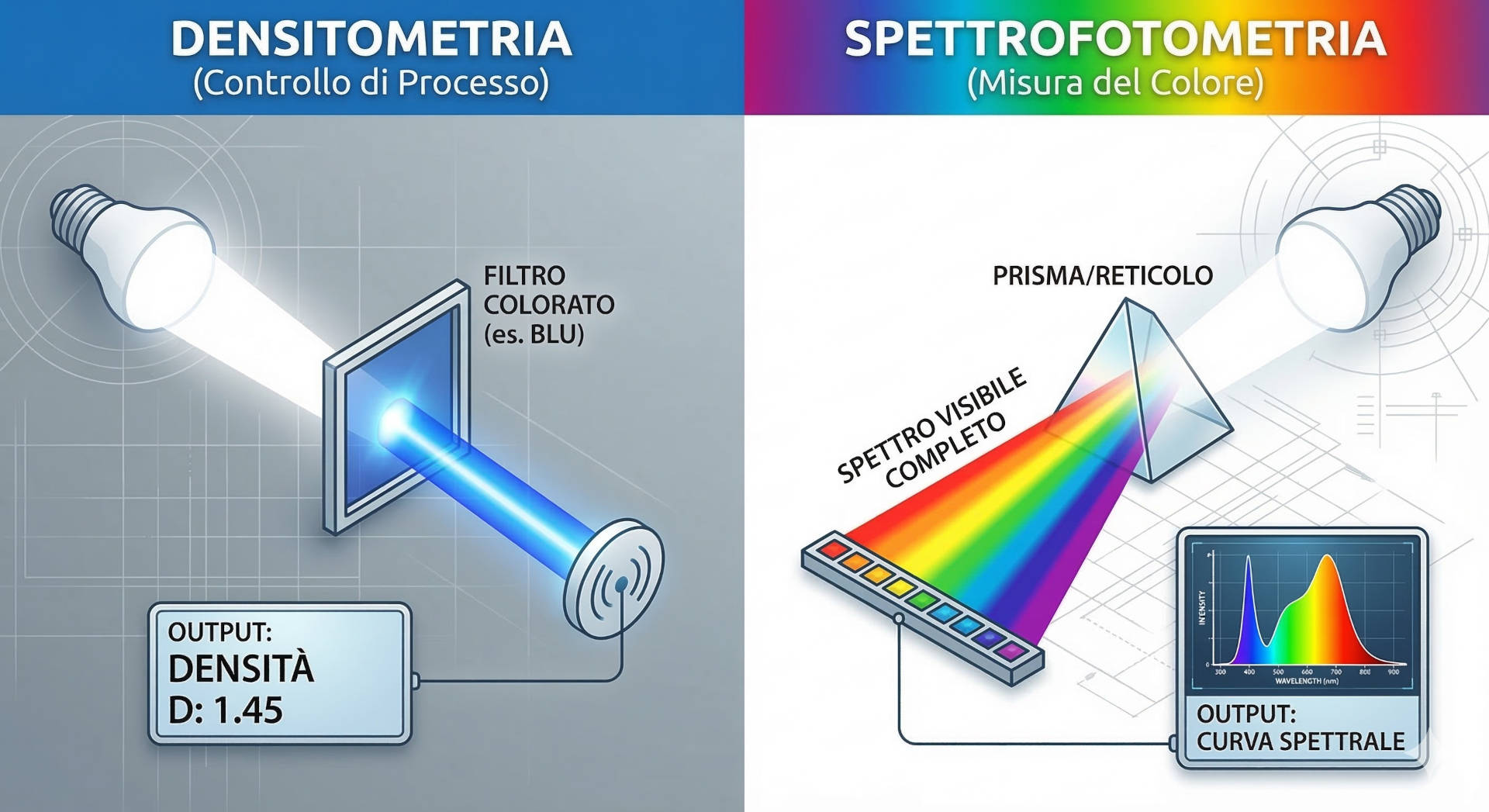
Unlike colourimetric or spectrophotometric instruments, it is not intended to describe colour perceptually, but rather to quantify light absorption by the ink film deposited on the substrate.
The underlying principle is well established and internationally standardised, with reference to the ISO 5 series standards dedicated to photographic and graphic densitometry.
Densitometers used in the printing industry can be classified based on their architecture and usage context:
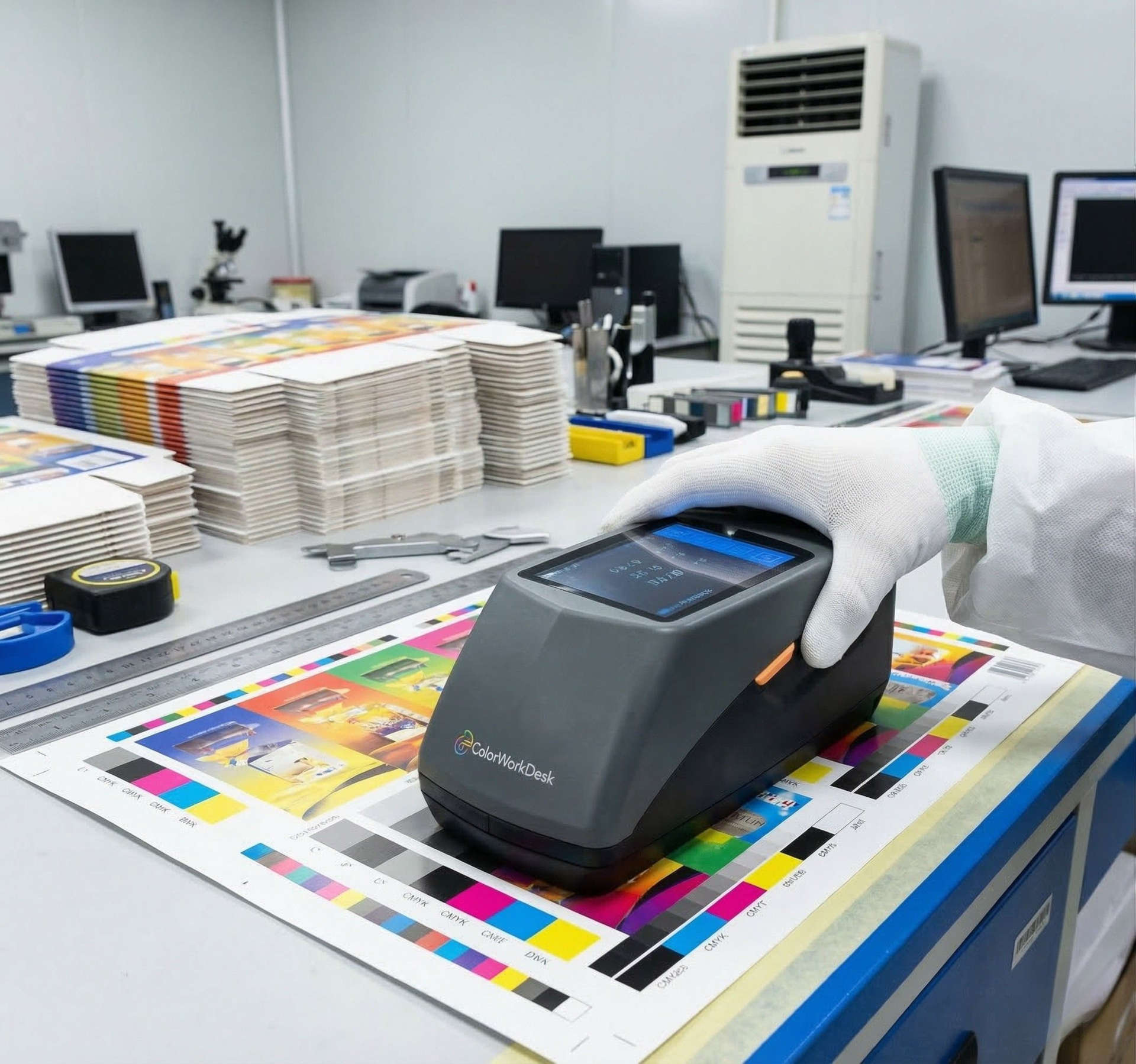
- Portable spot-reading instruments, typically used directly on press or in the testing room for quick measurements on printed sheets,
- Bench-top systems integrated into quality control workflows, often paired with data management and storage software,
- Automated colour bar scanning systems, mounted on-press or in-line with the sheet feeding system.
Each category addresses different operational needs, but all share the same physical measurement principle.
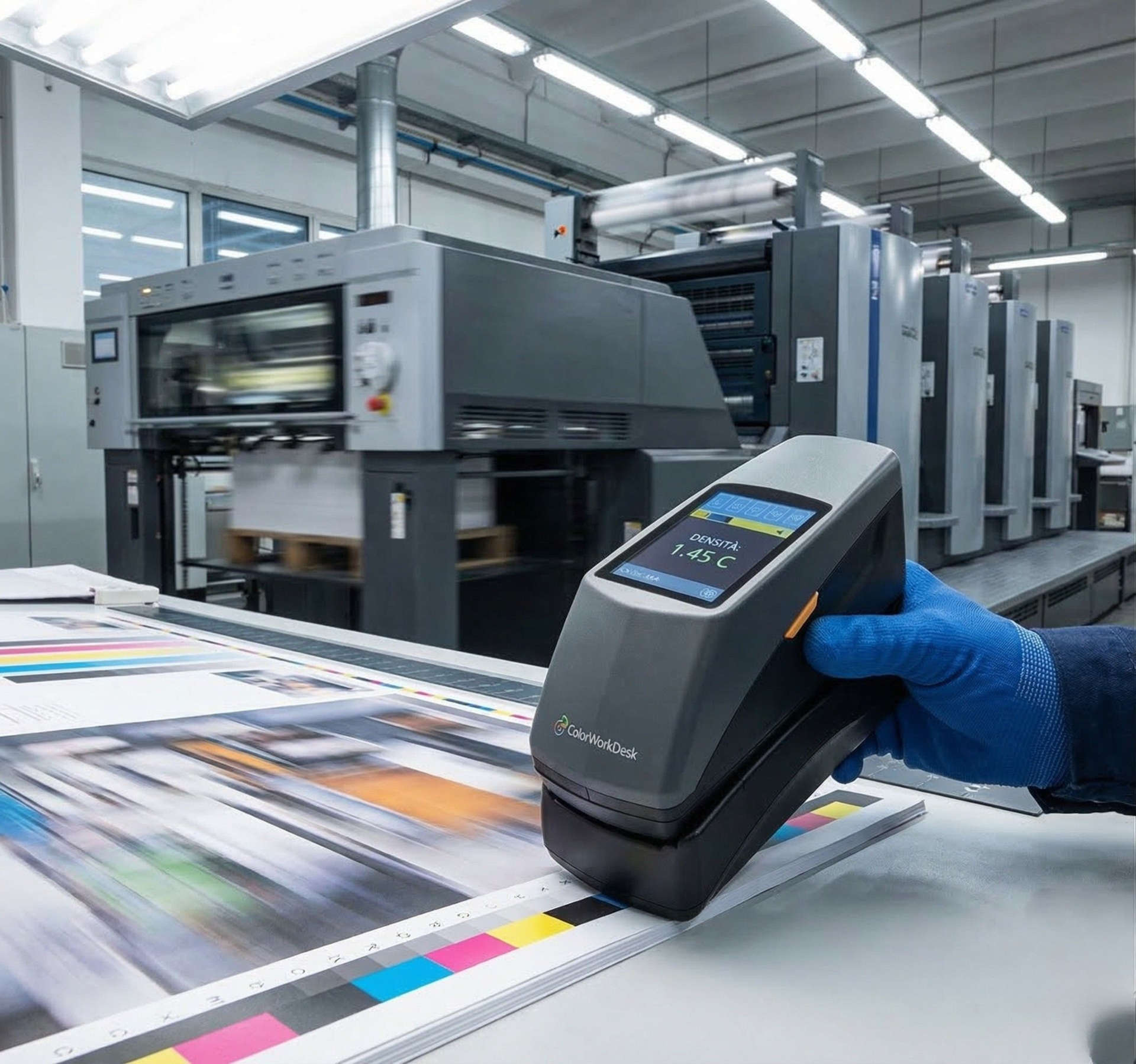
A Densitometer is used to measure ink density
In offset printing quality control, the densitometer plays a central role: it allows real-time verification that the ink film applied to sheets is uniform, consistent with process targets, and compliant with reference standards defined during print preparation.
The main operational functions of a densitometric instrument in printing include:
- Solid ink density control, used as the primary reference for calibrating ink feed,
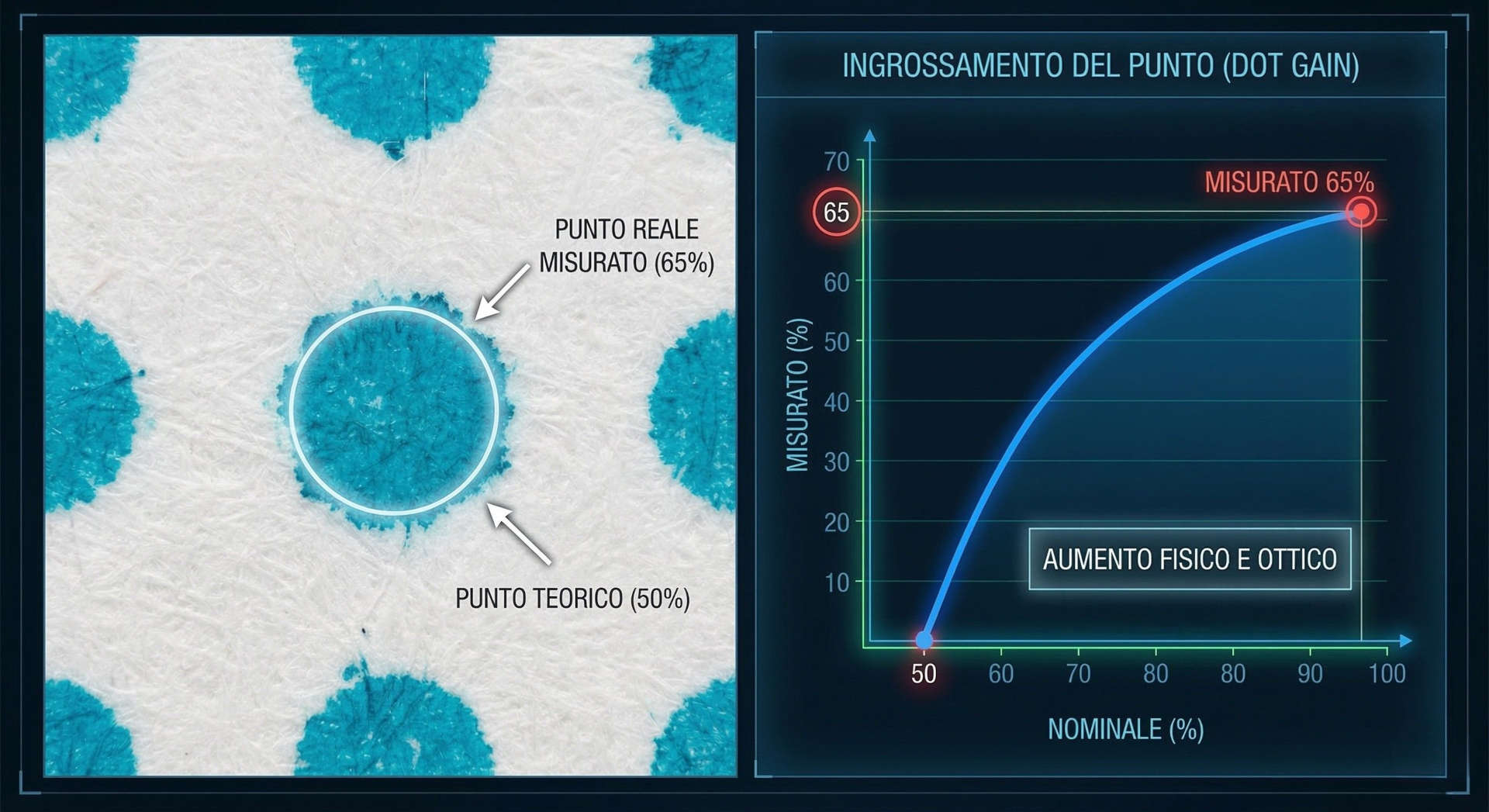
- Dot gain evaluation, i.e., the physical and optical increase in halftone dot size compared to nominal file values, essential for managing the print curve,
- Trapping calculation, which expresses how effectively ink transfers over a previously printed layer, a critical parameter in multi-colour inline printing,
- Print contrast verification, an index relating solid density to halftone density, revealing the ink’s actual reproduction capability in highlights and shadows.
These parameters, systematically measured along the colour bars at the sheet margins, allow operators to promptly adjust machine settings before deviations appear in the printed product.
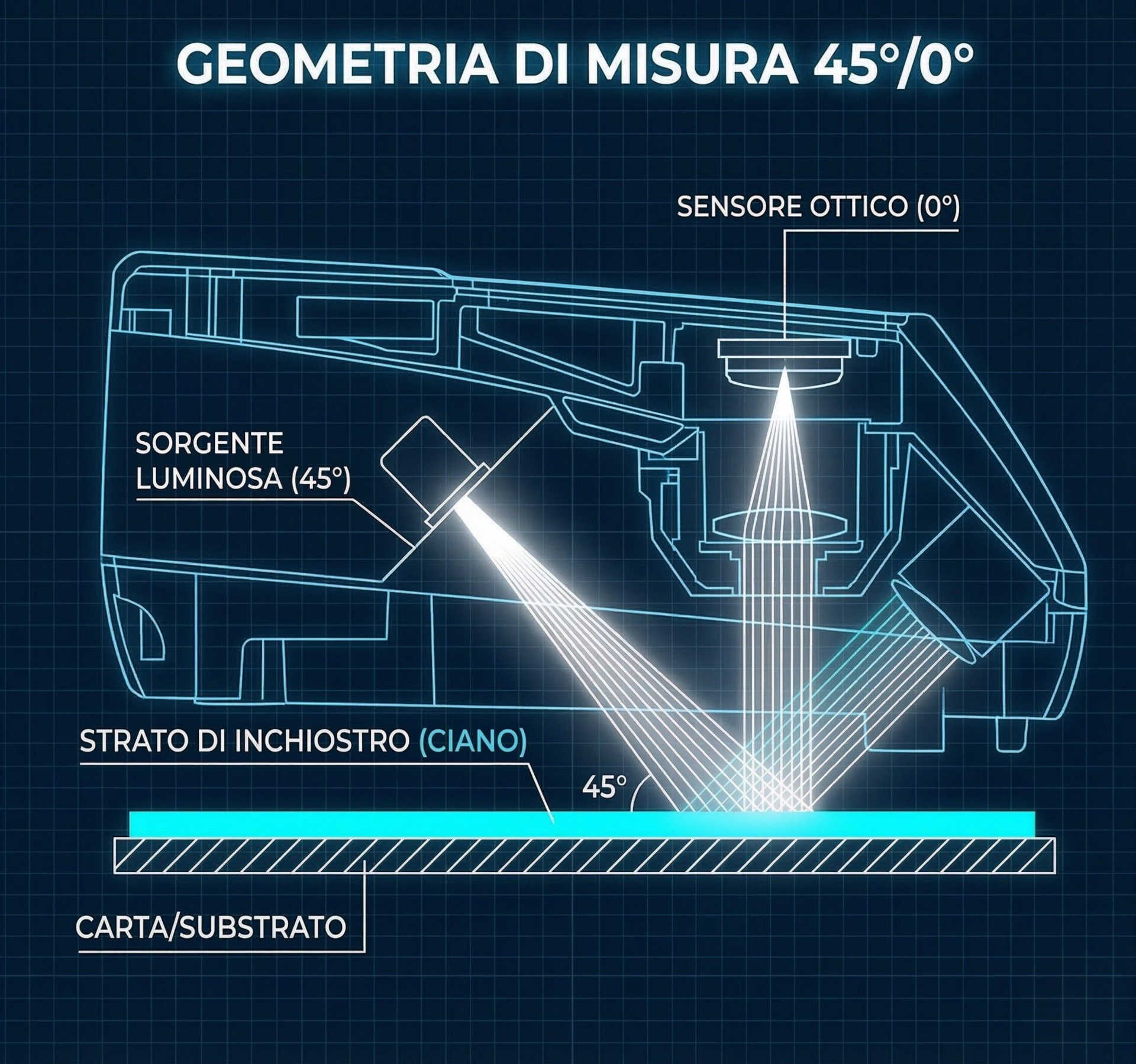
How a Densitometer works
The operation of a densitometer is based on an optical process that is relatively simple in structure but rigorous in its technical specifications.
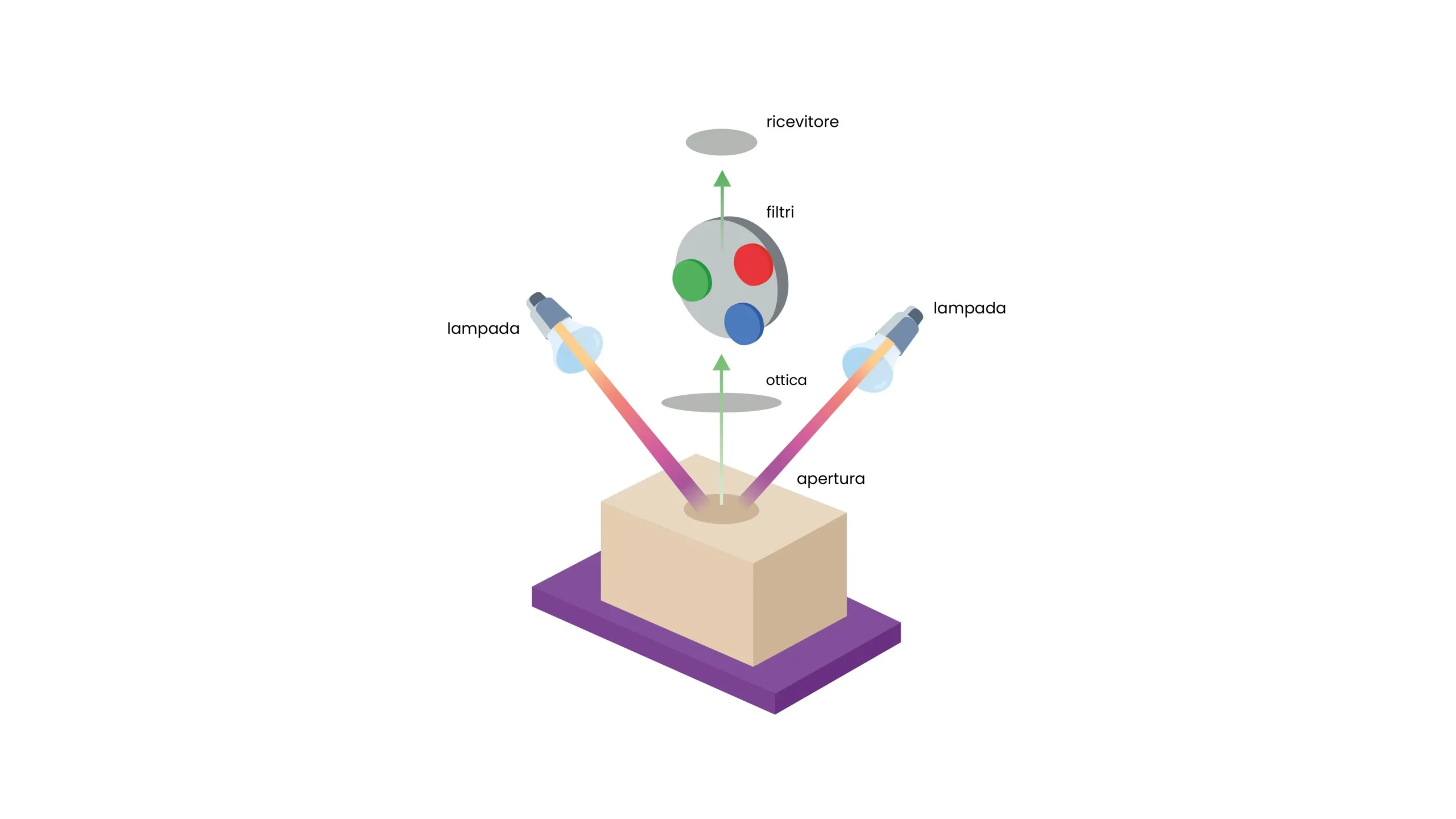
A controlled-intensity light source illuminates the printed surface using standardised geometry, typically 45°/0° or integrating sphere, according to ISO standards.
The light reflected from the surface is collected by a sensor and compared with that reflected from a reference white.
The optical density value is calculated using a logarithmic relationship expressing the ratio between the reflectance of the reference white and that of the measured sample:
D = log₁₀ (R₀ / R)
where R₀ represents the reflectance of the reference white and R that of the measured surface.
The use of a logarithmic scale is not arbitrary: it reflects the human eye’s perceptual response to brightness variations and allows linear representation of absorption changes spanning multiple orders of magnitude.
A key technical aspect is the use of specific densitometric filters. In four-colour offset printing, the most common European standard is Status E, which uses filters optimised for the absorption spectra of process inks (cyan, magenta, yellow, black).
In other contexts, particularly in the North American market, the Status T filter is used. The choice of filter directly affects measured density values and must align with process profiles and contractual specifications.

What is ink optical density and how to interpret It
nk optical density is the physical-chemical quantity that describes the ability of an ink film to absorb incident light within a specific spectral band.
It should be emphasised that printing almost exclusively deals with reflection density, measured on the surface of printed sheets, rather than transmission density, which applies to transparent materials like films and plates.
Optical density is expressed in dimensionless units, and its value increases with both the thickness of the ink film and the colouring efficiency of the pigment.
Characteristic values vary depending on the printing process, ink type, and substrate. Therefore, it is not correct to define a universally valid range: each process has its own density targets, defined based on reference standards (such as PSO specifications for coated paper offset printing) or agreed contractually between supplier and client.
For ink film control purposes, optical density plays a dual role:
- As a quantitative indicator of film thickness: for the same ink, higher density indicates a greater ink deposit on the substrate
- As a reference for colour consistency across different jobs: maintaining density within defined tolerance limits ensures colour reproducibility over time and across print runs
The relationship between density and colour quality is not absolutely linear — density does not describe colour perception — but in offset process control it remains a reliable and operationally simple indicator.
Densitometer vs Spectrophotometer: complementary, not alternative tools
In the landscape of printing measurement instruments, the densitometer and the spectrophotometer address different analytical needs and therefore both remain essential in advanced laboratories and pressrooms.
The spectrophotometer measures surface reflectance across the entire visible spectrum, providing data to calculate colourimetric values such as CIE Lab* coordinates, Delta E values, and colour temperature. It is indispensable for ICC profile-based colour management, spot colour approval, and comparison with digital colour standards.
The densitometer, on the other hand, operates on filtered spectral bands and provides a synthetic numerical value directly related to process variables.
For this reason, it remains the primary instrument for on-press control:
- Faster response times and easier interpretation by operators,
- Derived parameters — dot gain, trapping, print contrast — are calculated directly from densitometric values, without complex colourimetric processing,
- Integration with closed-loop press control systems is historically based on densitometry.
Today, hybrid instruments known as spectrodensitometers are available, capable of providing both densitometric and spectral data in a single measurement.
These devices are gaining popularity, but they do not make traditional densitometers obsolete in contexts where operational simplicity and speed are priorities.
How much does a printing Densitometer cost
Price variability in the densitometer market is significant and reflects substantial differences in performance, instrument architecture, and integration level with production systems.
Understanding cost drivers helps identify the most suitable solution for specific operational needs.
The main factors influencing densitometer pricing are:
- Measurement technology: single-band filtered sensors are simpler than spectral acquisition systems, resulting in lower costs,
- Accuracy and repeatability: instruments for certified quality control or laboratory environments require higher-quality optical components and stricter calibration procedures,
- Spectrodensitometric functionality: combined devices have structurally higher costs but offer greater versatility,
- Software and reporting capabilities: data storage, ISO-compliant reporting, and MIS/ERP integration significantly impact total cost,
- Portability vs fixed installation: handheld devices are generally more affordable than bench-top or automated scanning systems,
- Automation level: automated colour bar scanning systems for continuous production represent high-end investments justified by reduced manual intervention and improved data quality.
For companies operating in high-volume industrial printing, cost evaluation should also consider the cost of non-quality: waste, downtime, and rework have a significant economic impact that proper measurement instruments help reduce.
The Importance of Using Professional Instruments
The densitometer remains an essential reference tool in ink and industrial print quality control.
Its ability to translate ink film behavior into objective numerical values — from solid density to dot gain, from trapping to contrast — makes it an immediately applicable operational tool, fully compatible with modern offset production speeds.
The availability of professional, calibrated instruments compliant with industry standards is essential to ensure colour consistency across jobs, compliance with contractual specifications, and reduction of production waste. In a market where perceived print quality is increasingly critical, investing in proper measurement instrumentation means building a measurable competitive advantage.
In this context, specialised companies such as Color Work Desk, committed to the dissemination of measurement technologies and process control solutions related to colour and inks, play an important role in supporting companies and laboratories in selecting reliable, standards-compliant instruments, contributing to process stability and print reproducibility.
FAQ
Do densitometers measure colour?
No, not in the colourimetric sense. Densitometers measure optical density, i.e., the amount of light absorbed by the ink film in specific filtered spectral bands. They do not provide colourimetric coordinates such as L*a*b* or Delta E values, which are measured by spectrophotometers. Densitometry is a process measurement, not a perceptual colour measurement.
What density values are correct in offset printing?
There is no universally correct value: density targets depend on ink type, substrate, printing technology, and reference standards used. PSO (Process Standard Offset) specifications, published by Fogra and incorporated into ISO 12647-2, provide reference guidelines for coated and uncoated paper, but target values must always be defined based on the specific process profile. What matters is consistency and stability over time, not reaching an absolute number.
How is a densitometer calibrated?
Densitometer calibration involves two main steps: zero calibration (measurement of the reference white) and periodic verification using certified standards with known density. Calibration frequency depends on usage intensity and environmental conditions such as temperature, humidity, and light variations, which can affect measurement stability. Professional-grade instruments include self-calibration routines and alerts when recalibration is required.
What is the difference between ink density and ink film thickness?
Optical density and ink film thickness are related but distinct quantities. Thickness is a physical measurement expressed in length units (typically micrometers), while optical density is a dimensionless quantity representing light absorption. For the same ink, a thicker film generally results in higher density, but the relationship is not strictly linear and also depends on the ink’s rheological and optical properties. In practice, printing relies on optical density, which can be measured quickly and non-invasively on the printed surface without sampling.

Subscribe to newsletter
You might be interested

ColorWorkDesk: your colourimetry with our consulting
Choosing a product like ColorWorkDesk means customising your colour management ...

ColorWorkDesk: Measuring Colour with Spectrophotometers
The study of colour is a more complex field than ...
The Colourimeter: precision and Colour control in industrial applications
Unlike the subjective perception of the human eye, this precision ...

ColorWorkDesk CWD Server: The software that provides colourimetry services
ColorWorkDesk CWD Server leverages server/cloud technology to centrally manage colour ...

Light Booths: the fundamental tool for Colour Quality Control
Light booths, also known as illumination booths or colour viewing ...
Ask for a free consultation
Our experts will contact you to show you a demo of our products